English
 Español
  Português
  русский
  Français
  日本語
日本語  Deutsch
  tiếng Việt
  Italiano
  Nederlands
  ภาษาไทย
  Polski
  한국어
한국어  Svenska
  magyar
  Malay
Malay  বাংলা ভাষার
  Dansk
Dansk  Suomi
Suomi  हिन्दी
  Pilipino
  Türkçe
  Gaeilge
  العربية
  Indonesia
  Norsk
Norsk  تمل
تمل  český
český  ελληνικά
  український
  Javanese
  فارسی
فارسی  தமிழ்
தமிழ்  తెలుగు
  नेपाली
  Burmese
  български
  ລາວ
ລາວ  Latine
  Қазақша
  Euskal
  Azərbaycan
  Slovenský jazyk
  Македонски
  Lietuvos
  Eesti Keel
  Română
  Slovenski
  मराठी
मराठी  Srpski језик

Call Us
+86-15768259626
Email Us
coco@zyepower.com

Designing a Smart BMS for Drone LiPo Packs: Telemetry, Protections, and OTA Updates
A battery management system used to mean one thing: keep the cells from catching fire. That's still on the list, but for industrial UAV applications, a basic protection circuit isn't enough anymore.
Modern drone operations demand smarter hardware. Fleet managers want live battery data mid-flight. Engineers need protection logic that responds to real-world conditions, not just static thresholds. And as BMS firmware matures, the ability to push updates to deployed packs without pulling them from service has become a genuine operational advantage.
Here's a working breakdown of what goes into designing a smart BMS for drone LiPo packs — and why each layer matters.
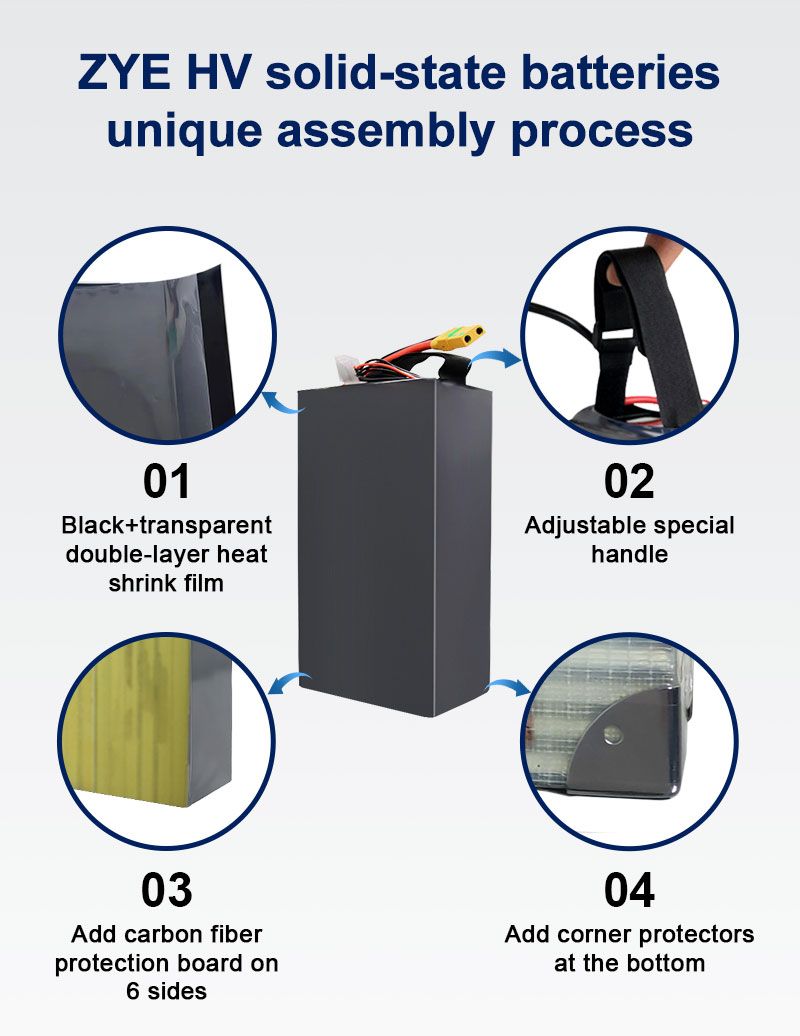
Telemetry: Making the Battery Talk
The first job of a smart BMS is data collection. Cell-level voltage monitoring is the foundation — you need individual cell readings, not just pack voltage. A six-cell LiPo pack can show a healthy aggregate voltage while hiding one weak cell that will buckle under load.
Beyond voltage, a well-designed BMS should report:
State of Charge (SoC) — calculated from coulomb counting plus voltage curves, not voltage alone
State of Health (SoH) — derived from capacity fade tracking across cycles
Temperature — ideally from multiple sensor points across the pack, not just the housing
Current draw — real-time and logged, useful for diagnosing airframe or payload issues
Cycle count — per pack, automatically logged
This data streams to the flight controller over CAN bus or UART, and surfaces in ground station software. For fleet operations, it feeds into battery health dashboards that flag packs approaching end-of-service before they become field incidents.
The telemetry layer is what turns a LiPo battery from a power source into an asset with a documented service history.
Protections: Where the Logic Lives
Protection design in a drone BMS has to balance safety with operational practicality. Protections that are too aggressive ground aircraft unnecessarily. Protections that are too permissive let hardware degrade or fail.
The core protections in any serious UAV BMS design:
Overvoltage / Undervoltage — Cell-level cutoffs, not pack-level. Triggered when any individual cell hits the defined ceiling or floor. These are non-negotiable.
Overcurrent — Both continuous and peak thresholds. Industrial drones pulling surge current during heavy-payload lifts need headroom; the BMS needs to distinguish a legitimate power spike from a fault condition.
Thermal protection — Temperature-based charge and discharge derating. When cell temps rise above a defined limit, the BMS reduces available current before reaching hard cutoff. This is more useful than a straight shutoff — it lets the aircraft complete a landing rather than cutting power abruptly.
Cell balancing — Passive or active, running during charging. Unbalanced cells are one of the primary causes of premature LiPo degradation. A BMS that doesn't balance is leaving cycle life on the table.
Short circuit detection — Fast-acting, with recovery logic to distinguish a true short from a transient fault.
Each of these protections needs tuned thresholds, not defaults copied from a reference design. The operating profile of an industrial drone — payload weight, flight altitude, ambient temperature range — should drive the calibration.
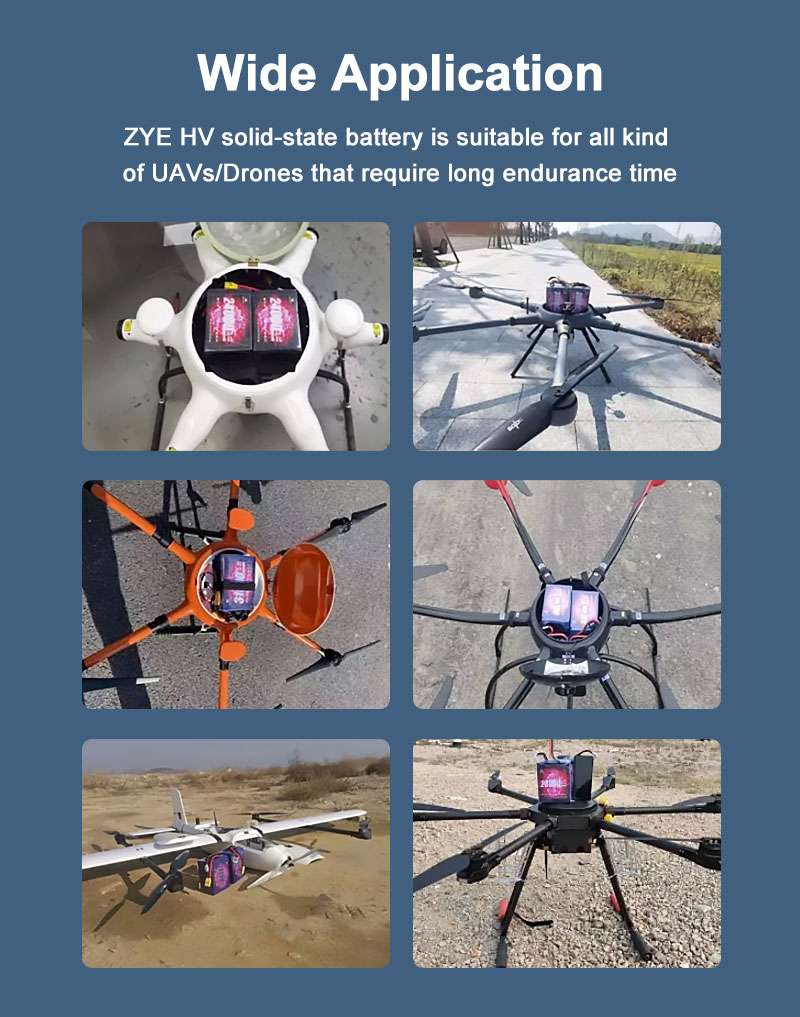
OTA Updates: Firmware Without the Downtime
This is where smart BMS design separates from legacy hardware. Over-the-air firmware updates allow protection thresholds, balancing algorithms, and telemetry parameters to be revised without physically pulling packs from service.
For large fleets, this is significant. Updating BMS firmware on fifty packs manually takes time and introduces handling risk. OTA pushes the update over the drone's data link or a ground station connection during routine charging.
Security matters here. OTA update pipelines need signed firmware packages and version verification to prevent unauthorized modification — especially relevant for commercial or regulated UAV operations.
How ZYEBATTERY Approaches BMS Design
ZYEBATTERY builds its high-performance lithium polymer and solid-state lithium-ion UAV batteries with integrated smart BMS hardware designed specifically for industrial drone applications. That means cell-level telemetry, calibrated multi-layer protections, and BMS architectures built to support firmware updates as operational requirements evolve.
The goal isn't just a battery that works. It's a battery that communicates, protects intelligently, and stays current across a full service life.
Send Inquiry



X
We use cookies to offer you a better browsing experience, analyze site traffic and personalize content. By using this site, you agree to our use of cookies.
Privacy Policy
News
 How to build a drone lipo battery pack?2025/08/28