English
 Español
  Português
  русский
  Français
  日本語
日本語  Deutsch
  tiếng Việt
  Italiano
  Nederlands
  ภาษาไทย
  Polski
  한국어
한국어  Svenska
  magyar
  Malay
Malay  বাংলা ভাষার
  Dansk
Dansk  Suomi
Suomi  हिन्दी
  Pilipino
  Türkçe
  Gaeilge
  العربية
  Indonesia
  Norsk
Norsk  تمل
تمل  český
český  ελληνικά
  український
  Javanese
  فارسی
فارسی  தமிழ்
தமிழ்  తెలుగు
  नेपाली
  Burmese
  български
  ລາວ
ລາວ  Latine
  Қазақша
  Euskal
  Azərbaycan
  Slovenský jazyk
  Македонски
  Lietuvos
  Eesti Keel
  Română
  Slovenski
  मराठी
मराठी  Srpski језик

Call Us
+86-15768259626
Email Us
coco@zyepower.com

Which High-Energy Solid State Batteries Fit Long-Range UAV Missions?
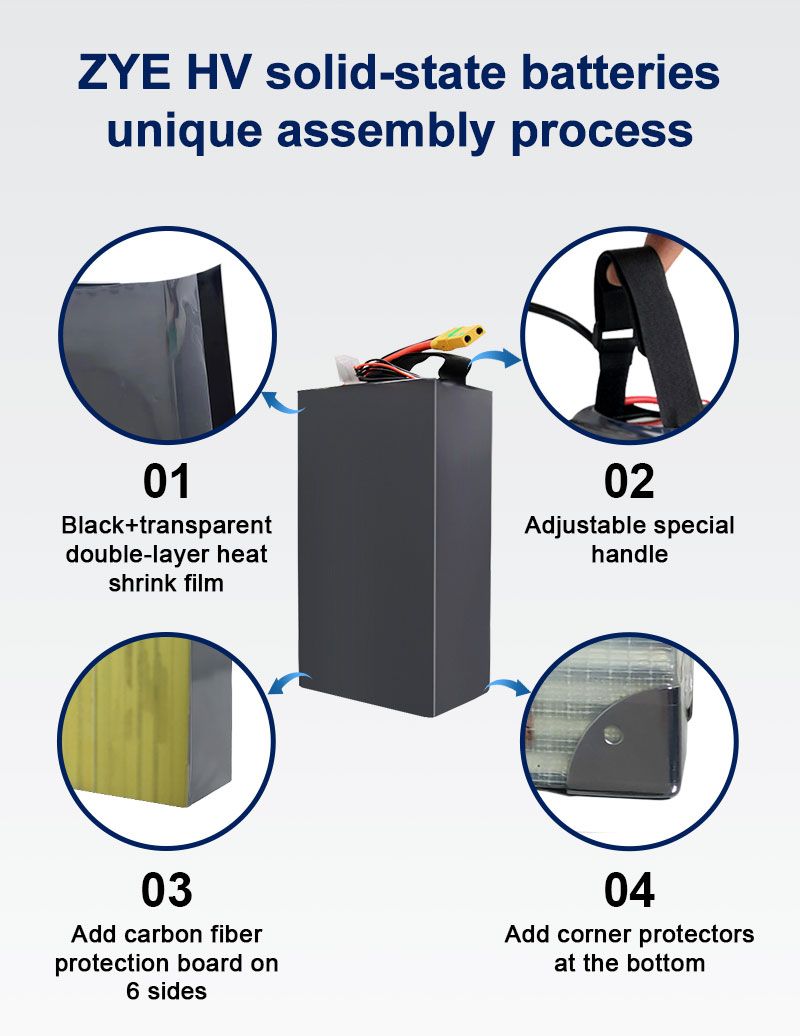
High‑energy solid state batteries that fit long‑range UAV missions are the ones that combine very high Wh/kg with the right voltage, C‑rate, and form factor for your airframe—not just any “solid state” label.
What “high‑energy” really means for long‑range UAVs
For long‑range fixed‑wing or VTOL UAVs, you are usually trying to maximize flight time at a fixed take‑off weight. In practice, that means choosing solid state or semi‑solid state batteries with:
Pack‑level energy density typically in the 250–350 Wh/kg range or higher, so you get substantially more usable energy than a typical LiPo pack of the same weight.
Moderate C‑rates (for example 5–10C continuous) that are enough for take‑off, climb, and VTOL transitions, but optimized for efficient cruise rather than extreme bursts.
Voltage configurations (6S, 12S, 14S and up) that match your propulsion system’s efficiency sweet spot and keep current low to reduce I²R losses in cables and ESCs.
These parameters together decide how far your long‑range UAV can realistically fly on one charge.
Typical solid state options seen in long‑range platforms
Most long‑range UAV projects today use one of three high‑energy solid state design directions:
Semi‑solid state Li‑ion packs (around 300–350 Wh/kg)
Semi‑solid state batteries use a mix of solid and gel‑like electrolyte to achieve high energy density with better safety and stability than standard Li‑ion.
Commercial UAV‑focused packs in this class are often available in 6S and 12S, 16–36 Ah ranges, with pack‑level densities around 300+ Wh/kg, making them strong candidates for long‑endurance fixed‑wing and VTOL mapping drones.
High‑energy solid state Li‑ion packs for endurance drones
Some suppliers offer “solid state Li‑ion” UAV batteries with energy densities above conventional LiPo but slightly below the most aggressive semi‑solid designs, often in the ~230–260 Wh/kg band at pack level.
These are attractive when you want a balance of higher energy, robust cycle life, and strong safety margins for commercial or government missions.
Next‑generation lithium‑metal solid state cells (for future designs)
Demonstrations in the eVTOL and cargo‑drone space show lithium‑metal/oxide‑ceramic solid state batteries reaching or targeting 400+ Wh/kg, with test flights that extend endurance by 60–90% versus liquid‑electrolyte packs.
These are still emerging, but they point to where long‑range UAV battery technology is heading over the next product generations.
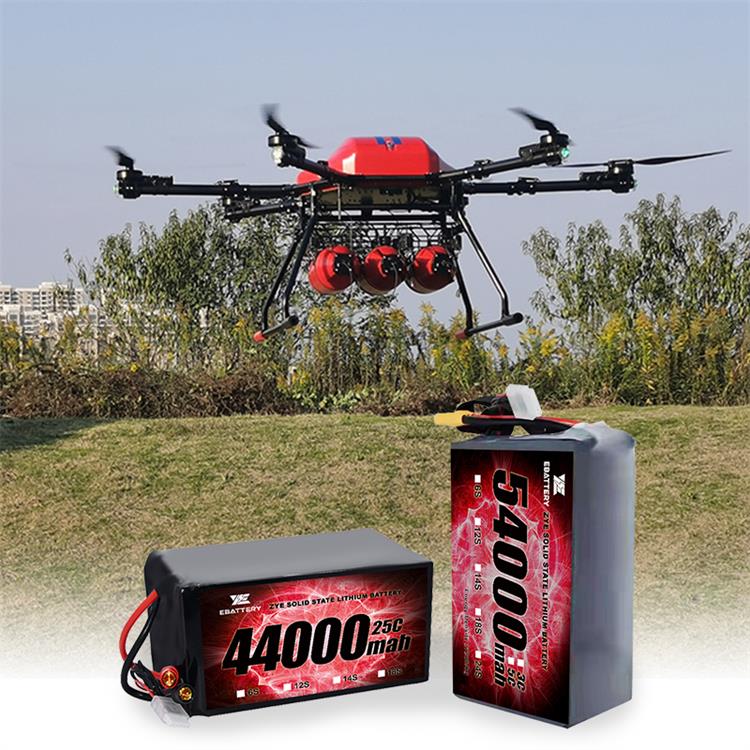
For ZYEBATTERY content, it is better to group solutions into these design classes than to rely heavily on third‑party brand names.
How to match a high‑energy solid state battery to a long‑range UAV
When you evaluate which high‑energy solid state battery “fits” a long‑range mission, look at how well it aligns with:
Mission profile: Long, steady‑state cruise (mapping, corridor inspection) benefits most from very high Wh/kg and moderate C‑rate, while mixed VTOL and loiter missions need a bit more power headroom.
Airframe integration: Slim, wing‑integrated or fuselage‑hugging packs can reduce drag and improve center‑of‑gravity control, turning stored energy into real extra minutes in the air.
Thermal and environmental conditions: Solid state and semi‑solid packs with strong low‑temperature performance and good thermal stability help preserve endurance in cold, hot, or high‑altitude operations.
Safety and regulations: Non‑flammable or low‑flammability solid/semi‑solid electrolytes reduce fire risk, which is important for BVLOS and operations over infrastructure or populated corridors.
The best‑fit battery is the one that meets all four without forcing compromises in payload or flight envelope.
Send Inquiry



X
We use cookies to offer you a better browsing experience, analyze site traffic and personalize content. By using this site, you agree to our use of cookies.
Privacy Policy
News
 How to build a drone lipo battery pack?2025/08/28