English
 Español
  Português
  русский
  Français
  日本語
日本語  Deutsch
  tiếng Việt
  Italiano
  Nederlands
  ภาษาไทย
  Polski
  한국어
한국어  Svenska
  magyar
  Malay
Malay  বাংলা ভাষার
  Dansk
Dansk  Suomi
Suomi  हिन्दी
  Pilipino
  Türkçe
  Gaeilge
  العربية
  Indonesia
  Norsk
Norsk  تمل
تمل  český
český  ελληνικά
  український
  Javanese
  فارسی
فارسی  தமிழ்
தமிழ்  తెలుగు
  नेपाली
  Burmese
  български
  ລາວ
ລາວ  Latine
  Қазақша
  Euskal
  Azərbaycan
  Slovenský jazyk
  Македонски
  Lietuvos
  Eesti Keel
  Română
  Slovenski
  मराठी
मराठी  Srpski језик

Call Us
+86-15768259626
Email Us
coco@zyepower.com

Which 6 Solid State UAV Battery Designs Boost Endurance Most?
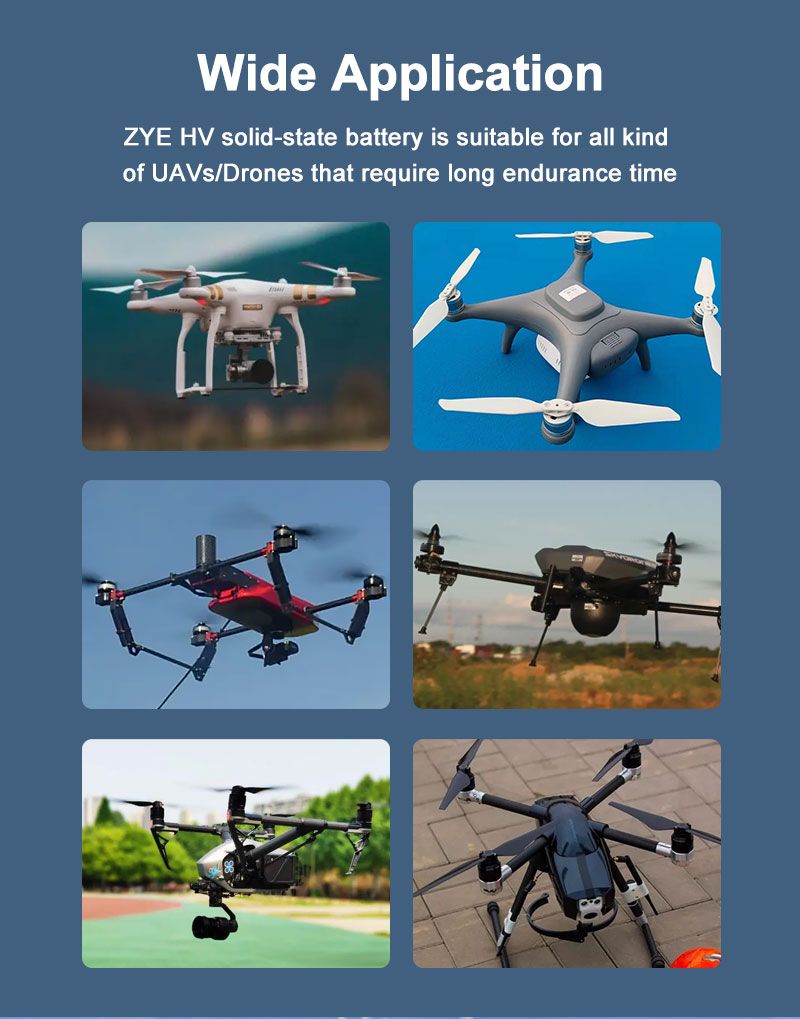
For UAV manufacturers, “more endurance” is no longer a vague wish list item. It is the metric that decides whether your drone wins tenders, secures approvals, and pays back its development cost. That is why so many OEMs are looking beyond conventional LiPo and asking how solid state UAV battery designs can unlock the next jump in flight time.
At ZYEBATTERY, we work with drone brands that are trying to squeeze every extra minute out of a fixed take‑off weight. What we see in real projects is simple: the biggest gains do not come from chemistry alone, but from how you design and integrate the battery. Here are six solid state UAV battery designs that consistently boost endurance the most.
1. High‑energy density pack for long‑range mapping
The first and most obvious design is the high‑energy density solid state pack built specifically for long‑range fixed‑wing or VTOL mapping drones. The goal is to maximize Wh/kg while keeping discharge rates aligned with relatively smooth cruise profiles.
Key traits:
Solid state cells with very high specific energy, tuned for steady current instead of aggressive bursts.
Slim pack geometry that fits within the wing or fuselage without hurting aerodynamics.
BMS calibrated for deep, but safe, depth‑of‑discharge so more of the rated capacity becomes usable flight time.
For OEMs, this design turns the same airframe into a drone that can cover more ground per mission without changing payload or motors.
2. Semi‑solid endurance pack for heavy multirotors
Heavy‑lift multirotors and industrial inspection drones need endurance, but they also draw higher currents in hover and climb. Here, a semi‑solid or hybrid solid state design often delivers the best balance.
This type of pack:
Uses a semi‑solid electrolyte architecture to combine higher energy density with better power output.
Keeps internal resistance low, so the UAV can hover and maneuver without severe voltage sag.
Offers longer flight time than LiPo at similar weight, while still tolerating the current spikes of VTOL phases.
This is a strong option for drones carrying cameras, LiDAR, or multi‑sensor payloads where every extra minute in the air increases data quality and mission value.
3. High‑voltage solid state pack for efficient propulsion
Endurance is not only about capacity; it is also about system efficiency. A high‑voltage solid state pack lets you redesign the powertrain to draw less current for the same power output.
Typical features:
Higher pack voltage allows smaller current for the same wattage, cutting I²R losses in wiring and ESCs.
Motors and ESCs are selected or rewound to match the new voltage, shifting the efficiency peak into your cruise region.
The solid state chemistry helps maintain stable voltage under load, keeping thrust more consistent during long legs.
This design is ideal for endurance‑focused platforms where you can control the entire system architecture from battery to propeller.
4. Ultra‑slim integrated wing battery
Sometimes the best way to boost endurance is to rethink where the battery lives in the airframe. Solid state cells, with their safer electrolyte and flexible form factors, can be packaged as ultra‑slim modules integrated into the wing or fuselage structure.
Benefits for UAV designers:
More wing area can be dedicated to energy storage without bulky bays or added drag.
Weight distribution is easier to optimize around the center of lift, reducing trim losses.
The structure can double as a heat sink, helping the pack operate in an efficient temperature window.
This approach suits high‑endurance fixed‑wing UAVs that prioritize range and loiter time for surveillance, border patrol, or environmental monitoring.
5. Ruggedized solid state pack for extreme environments
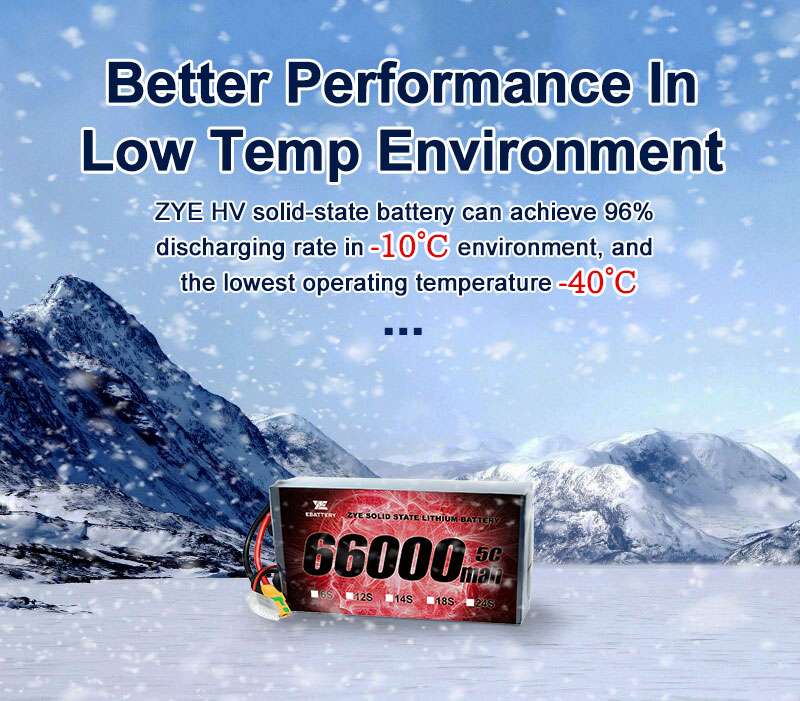
Endurance drops sharply when conventional packs are pushed into very hot, very cold, or high‑altitude conditions. A ruggedized solid state design protects flight time where LiPo starts to struggle.
Design elements include:
Solid electrolytes and cell chemistries chosen for wide temperature tolerance.
Insulation, thermal paths, and mechanical protection tailored for harsh landings and vibration.
BMS algorithms that adapt charge and discharge limits based on temperature and mission profile.
For UAVs deployed in deserts, arctic regions, or mountainous terrain, this kind of battery keeps flight time stable instead of collapsing at the edges of the envelope.
6. Fast‑charge solid state pack for high‑utilization fleets
Endurance is not just minutes per flight; it is also missions per day. A fast‑charge solid state pack enables short ground times without destroying cycle life.
This design focuses on:
Solid state cells that handle higher charge currents safely, with minimized risk of dendrite growth.
Pack layout and connectors optimized for rapid turnaround charging or battery‑swap systems.
Long cycle life so fleets can sustain intensive schedules without constant pack replacements.
For logistics, inspection, and public‑safety fleets, this effectively turns higher battery performance into higher aircraft utilization and revenue.
How ZYEBATTERY can turn designs into real flight time
For your blog readers, the key message is clear: there is no single “magic” solid state UAV battery. The biggest endurance gains come from choosing the right design for the right mission. As an OEM drone battery manufacturer, ZYEBATTERY can:
Combine high‑performance lithium polymer packs and advanced solid state lithium‑ion solutions in one roadmap.
Co‑design custom packs around your airframe, payload, and duty cycle.
Help you pick one or more of these six design directions and translate them into real, measurable increases in UAV endurance.
Invite readers to share their current flight time and target endurance, then position ZYEBATTERY as the partner that can close that gap with the right solid state UAV battery design—not just a bigger battery.
Send Inquiry



X
We use cookies to offer you a better browsing experience, analyze site traffic and personalize content. By using this site, you agree to our use of cookies.
Privacy Policy
News
 How to build a drone lipo battery pack?2025/08/28