English
 Español
  Português
  русский
  Français
  日本語
日本語  Deutsch
  tiếng Việt
  Italiano
  Nederlands
  ภาษาไทย
  Polski
  한국어
한국어  Svenska
  magyar
  Malay
Malay  বাংলা ভাষার
  Dansk
Dansk  Suomi
Suomi  हिन्दी
  Pilipino
  Türkçe
  Gaeilge
  العربية
  Indonesia
  Norsk
Norsk  تمل
تمل  český
český  ελληνικά
  український
  Javanese
  فارسی
فارسی  தமிழ்
தமிழ்  తెలుగు
  नेपाली
  Burmese
  български
  ລາວ
ລາວ  Latine
  Қазақша
  Euskal
  Azərbaycan
  Slovenský jazyk
  Македонски
  Lietuvos
  Eesti Keel
  Română
  Slovenski
  मराठी
मराठी  Srpski језик

Call Us
+86-15768259626
Email Us
coco@zyepower.com

What Makes Solid State Drone Batteries Safer Than Lipo Packs?
Solid state drone batteries are safer than LiPo packs mainly because they remove most of the ingredients and failure modes that cause swelling, fire, and thermal runaway in traditional lithium polymer batteries.
1. Non‑flammable solid electrolyte instead of liquid
Conventional LiPo packs use a flammable liquid or gel electrolyte soaked into a polymer pouch. If the pack is crushed, punctured, overcharged, or overheated, that liquid can leak, vaporize, and ignite, leading to fire or even explosion.
Solid state drone batteries replace this with a solid electrolyte that is inherently non‑flammable.
There is no volatile liquid to leak or spray out if the cell is damaged.
The solid layer acts like a built‑in fire barrier between anode and cathode, reducing the chance of thermal runaway spreading cell‑to‑cell.
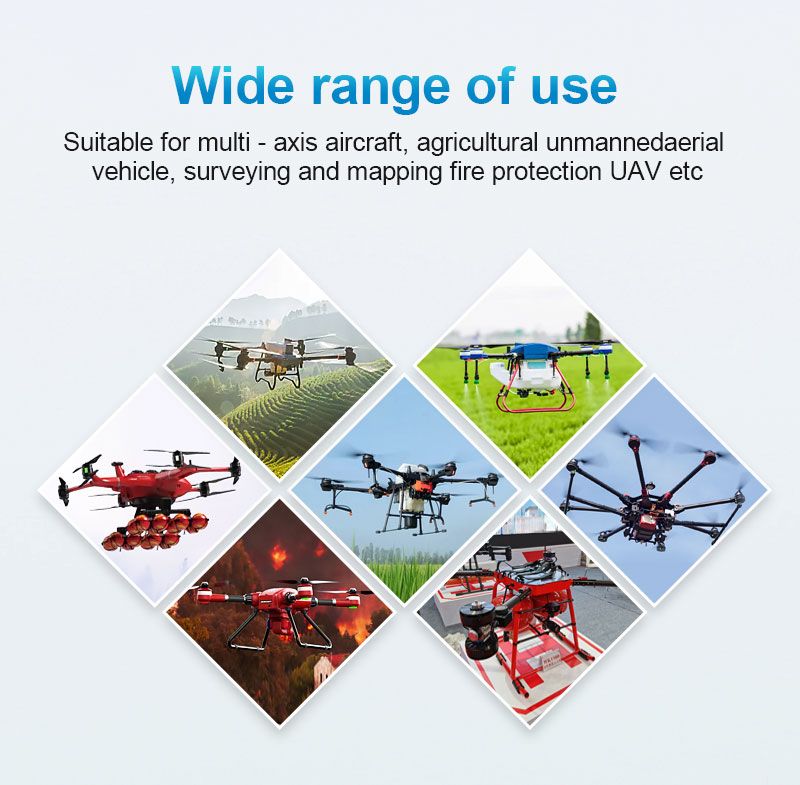
For UAVs flying over people, infrastructure, or critical assets, removing that flammable component is a major safety upgrade.
2. Stronger resistance to puncture, crash, and abuse
LiPo pouches are relatively soft. A hard landing, prop strike, or airframe deformation can pierce the pouch, short the electrodes, and expose flammable electrolyte to air.
Solid state cells use more rigid internal structures and solid electrolytes that do not leak even if the casing is compromised.
Tests such as nail penetration and impact show far lower risk of fire compared with conventional lithium cells.
The solid electrolyte also slows or blocks heat propagation between cells, giving the pack and airframe more time to dissipate energy before anything critical happens.
For industrial and enterprise UAVs, this mechanical robustness directly translates into safer operations in real‑world crash scenarios.
3. Dendrite suppression and fewer internal short circuits
One hidden danger in LiPo and other liquid‑electrolyte cells is dendrite formation: tiny, needle‑like lithium deposits that can grow through the separator and cause internal short circuits, particularly under fast charging or abuse.
Solid state electrolytes can physically block or strongly suppress dendrite growth.
The solid medium is harder for lithium to penetrate, so shorts are less likely even at higher charge rates.
By reducing this failure mode, solid state drone batteries maintain stability over many more cycles and under more aggressive charging profiles.
This is important for UAV fleets that rely on quick turnaround and frequent fast‑charge cycles between missions.
4. Wider and more stable operating temperature window
LiPo packs are sensitive to both cold and heat. At low temperatures they lose power and can be damaged if charged; at high temperatures their electrolyte and separator degrade faster, raising safety risks.
Solid state batteries tolerate a wider temperature range with more stable behavior.
They remain safer and more predictable in cold environments and high‑heat conditions where LiPo packs can swell or vent.
This makes them attractive for drones used in arctic inspection, desert surveillance, or high‑altitude missions.
For UAV manufacturers, this means fewer edge cases where the pack is operating close to its safety limits.
5. Better long‑term stability and lower degradation risk
Over time, LiPo packs can gas, swell, and develop internal damage that increases the chance of failure if they are pushed hard late in life. Operators see this as puffed packs, rising internal resistance, and unpredictable behavior.
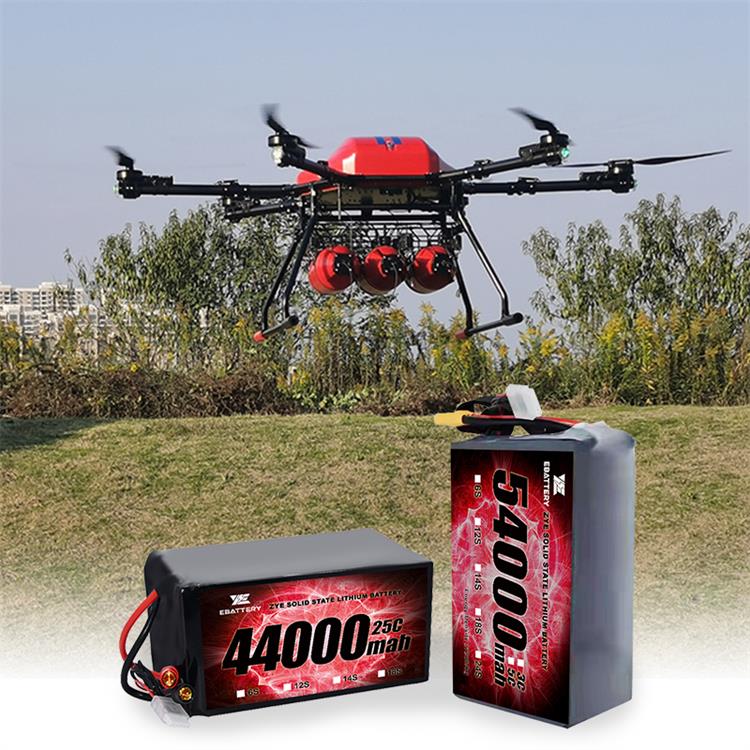
Solid state drone batteries age more slowly because their solid electrolyte and stable interfaces are less prone to decomposition.
They typically endure far more charge–discharge cycles before losing significant capacity.
Lower degradation means fewer “tired” packs still flying missions, which reduces safety incidents caused by old batteries being pushed too far.
For fleet managers, this improves both safety and total cost of ownership.
How ZYEBATTERY can position this in your blog
For your ZYEBATTERY article, you can frame solid state drone batteries as the safer evolution of UAV power:
They replace flammable liquid electrolyte with a non‑flammable solid medium.
They resist puncture, impact, and high‑stress charging far better than LiPo packs.
They keep drones safer in extreme temperatures and over more charge cycles.
Then connect this directly to your brand: ZYEBATTERY combines high‑performance lithium polymer packs with next‑generation solid state lithium‑ion solutions, giving OEMs a clear safety roadmap—from today’s LiPo designs to safer, longer‑lasting solid state drone batteries in their next‑generation platforms.
Send Inquiry



X
We use cookies to offer you a better browsing experience, analyze site traffic and personalize content. By using this site, you agree to our use of cookies.
Privacy Policy
News
 How to build a drone lipo battery pack?2025/08/28