 English
 Español
 Português
 русский
 Français
 日本語
 Deutsch
 tiếng Việt
 Italiano
 Nederlands
 ภาษาไทย
 Polski
 한국어
 Svenska
 magyar
 Malay
 বাংলা ভাষার
 Dansk
 Suomi
 हिन्दी
 Pilipino
 Türkçe
 Gaeilge
 العربية
 Indonesia
 Norsk
 تمل
 český
 ελληνικά
 український
 Javanese
 فارسی
 தமிழ்
 తెలుగు
 नेपाली
 Burmese
 български
 ລາວ
 Latine
 Қазақша
 Euskal
 Azərbaycan
 Slovenský jazyk
 Македонски
 Lietuvos
 Eesti Keel
 Română
 Slovenski
 मराठी
 Srpski језик

Call Us
+86-15768259626
Email Us
coco@zyepower.com

What is solid state battery technology?
What Is Solid State Battery Technology? The Complete Answer for UAV Operators
Solid state battery technology gets referenced constantly in drone industry conversations, investment discussions, and product marketing. The term is used precisely by engineers and loosely by everyone else — which means the same 4 words can describe anything from a genuine technological breakthrough to a marketing reframe of existing chemistry.
This is the complete, accurate answer to what solid state battery technology actually is — where it came from, what distinguishes it from conventional battery technology, how it branches into different designs, and what it means specifically for UAV applications.
The Core Definition
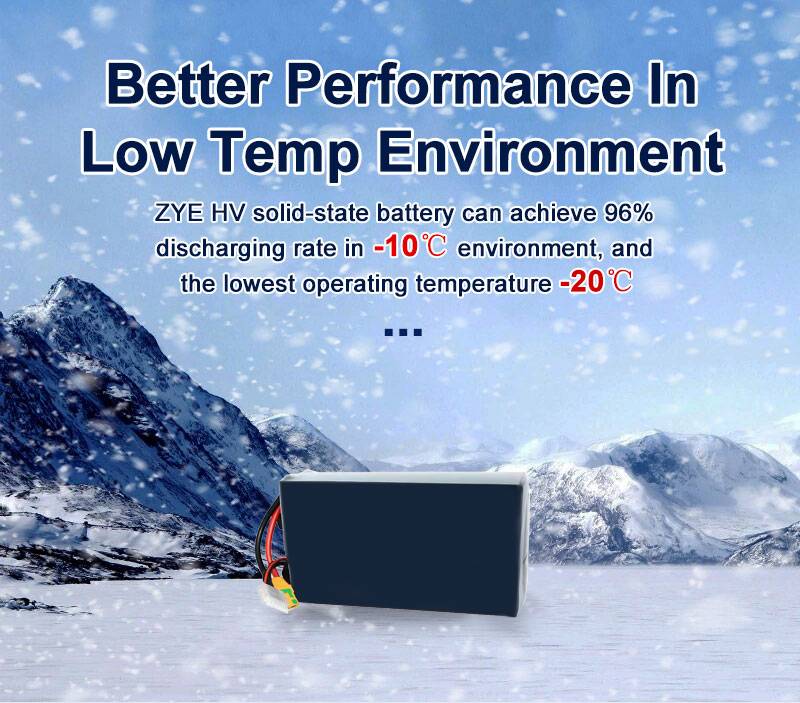
Solid state battery technology refers to electrochemical energy storage systems in which the liquid or gel electrolyte used in conventional lithium batteries is replaced by a solid material.
That's the technical definition. Everything else — the safety improvements, the energy density potential, the longer cycle life, the manufacturing challenges — follows from that 1 substitution.
The electrolyte in any lithium battery exists to conduct lithium ions between electrodes while blocking electrons. Conventional lithium polymer batteries accomplish this with organic liquid solvents containing dissolved lithium salts. Solid state technology accomplishes the same function using solid crystalline, amorphous, or polymer materials that conduct ions through their atomic structure rather than through liquid-phase diffusion.
Why This Technology Emerged
Liquid electrolytes have enabled 3 decades of lithium battery development, but they carry inherent limitations that incremental improvement can't overcome:
They're flammable. The organic solvents that make liquid electrolytes effective are combustible, creating thermal runaway risk under abuse conditions — the failure mode behind lithium battery fires.
They degrade over time. Liquid electrolytes react chemically with electrode surfaces across hundreds of charge-discharge cycles, forming resistive layers that reduce capacity and increase internal resistance.
They limit anode options. Liquid electrolytes can't safely accommodate lithium metal anodes because metallic lithium forms needle-like dendrites through liquid electrolytes that eventually cause internal short circuits.
Solid state technology addresses all 3 limitations structurally rather than through protective additives or circuit-level management. The solid electrolyte doesn't burn, degrades more slowly, and is dense enough to suppress lithium metal dendrite growth — enabling the high-capacity anode architecture that drives the technology's energy density potential.
The 3 Main Technology Branches
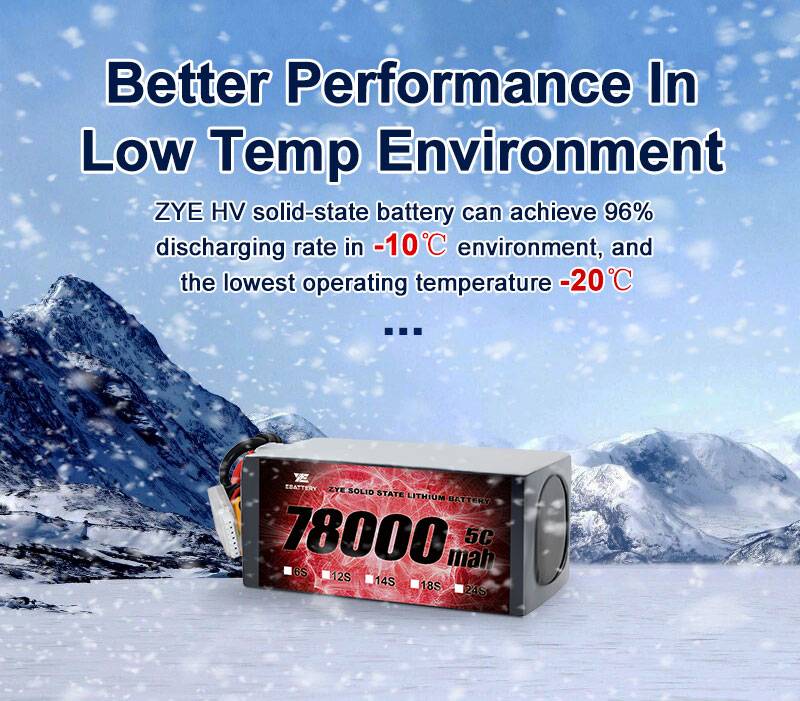
Solid state battery technology isn't 1 thing. It branches into 3 distinct electrolyte families, each with different performance characteristics:
Oxide-based solid electrolytes (such as LLZO — lithium lanthanum zirconium oxide) offer excellent chemical stability and wide voltage tolerance. Manufacturing requires high-temperature sintering, which adds production complexity and cost. Strong safety profile and long-term stability make this family attractive for demanding UAV applications.
Sulfide-based solid electrolytes achieve the highest ionic conductivity of current solid state options — comparable to liquid electrolytes, which enables better performance at room temperature and supports faster charging. More sensitive to moisture during manufacturing and can produce toxic gas if exposed to water. Several commercial UAV battery programs are based on sulfide electrolyte designs due to their conductivity advantage.
Polymer-based solid electrolytes are the most manufacturing-friendly — flexible, processable at lower temperatures, and compatible with existing battery production equipment. Ionic conductivity is lower than oxide or sulfide alternatives, and some polymer systems require elevated operating temperatures for optimal performance. Most commercially accessible semi solid state batteries use polymer or polymer-gel electrolytes.
Where Solid State Technology Stands in 2026 for UAV Applications
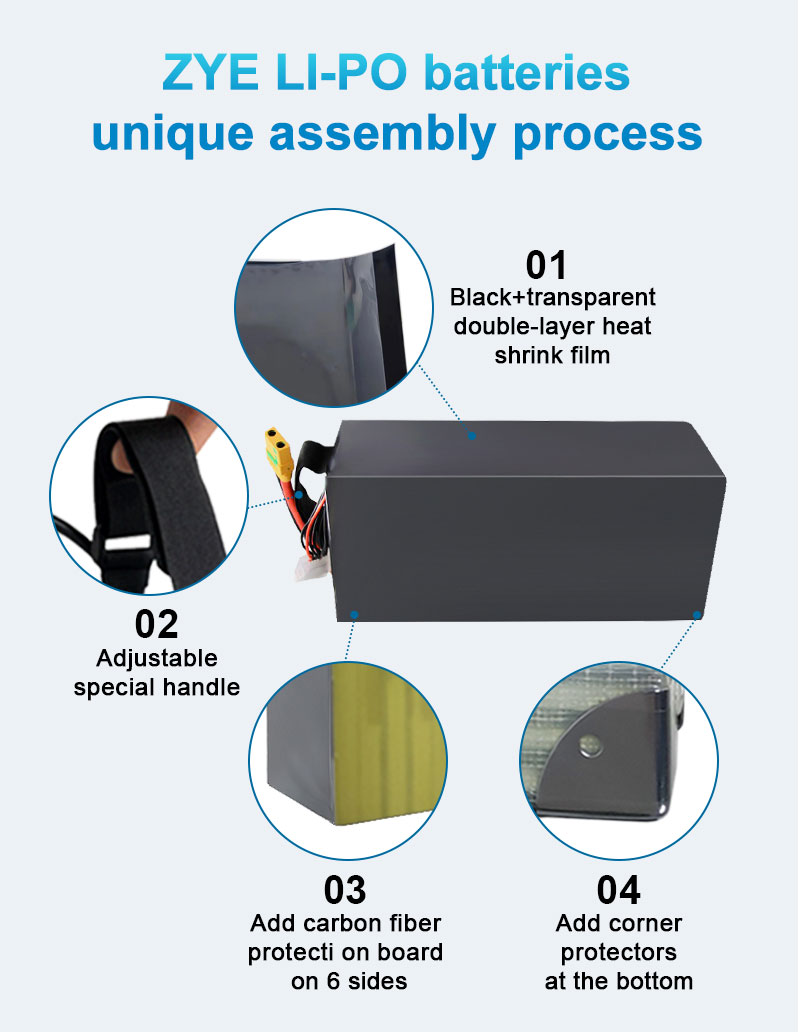
The technology is past early-stage laboratory demonstration and into commercial deployment — but unevenly. Semi solid state and polymer-based solid state batteries are available from multiple suppliers at commercial scale. Oxide and sulfide full solid state batteries with lithium metal anodes are commercially available in UAV formats but at higher cost and from fewer suppliers.
The performance ceiling — 350 to 400+ Wh/kg pack-level energy density, 700 to 900 cycle life, near-elimination of thermal runaway risk — represents what the technology achieves at its most capable. Not every product marketed as "solid state" reaches that ceiling.
ZYEBATTERY and Solid State UAV Battery Technology
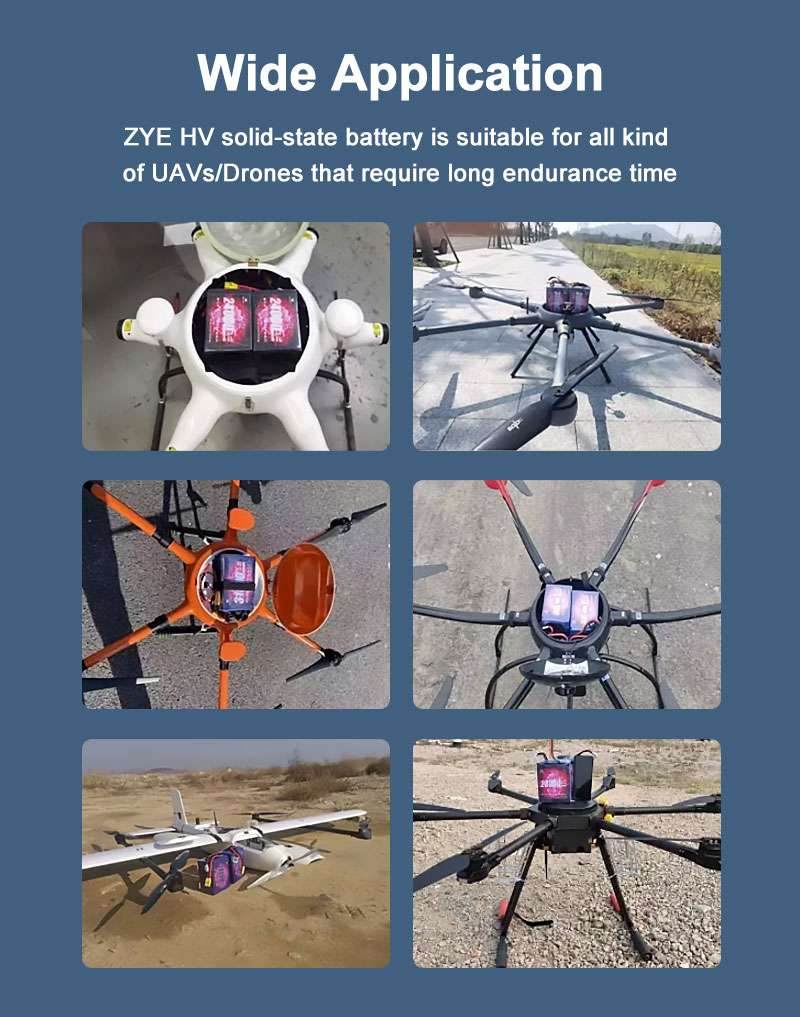
ZYEBATTERY develops solid state lithium ion and high-performance lithium polymer UAV batteries for commercial and industrial drone applications. Understanding what solid state battery technology actually encompasses — and where a specific product sits within that spectrum — is part of making a battery selection that delivers what the application requires.
The technology is real. The variation within it is significant. Knowing which part of solid state technology you're buying is where a useful procurement decision begins.
Send Inquiry



X
We use cookies to offer you a better browsing experience, analyze site traffic and personalize content. By using this site, you agree to our use of cookies.
Privacy Policy
News
 Will solid state batteries replace lithium ion?2026/11/09
Will solid state batteries replace lithium ion?
