 English
 Español
 Português
 русский
 Français
 日本語
 Deutsch
 tiếng Việt
 Italiano
 Nederlands
 ภาษาไทย
 Polski
 한국어
 Svenska
 magyar
 Malay
 বাংলা ভাষার
 Dansk
 Suomi
 हिन्दी
 Pilipino
 Türkçe
 Gaeilge
 العربية
 Indonesia
 Norsk
 تمل
 český
 ελληνικά
 український
 Javanese
 فارسی
 தமிழ்
 తెలుగు
 नेपाली
 Burmese
 български
 ລາວ
 Latine
 Қазақша
 Euskal
 Azərbaycan
 Slovenský jazyk
 Македонски
 Lietuvos
 Eesti Keel
 Română
 Slovenski
 मराठी
 Srpski језик

Call Us
+86-15768259626
Email Us
coco@zyepower.com

Semi solid state battery: What you need to know
Semi Solid State Battery: What You Need to Know Before Buying One for Your UAV
The battery market between conventional lithium polymer and full solid state isn't empty. Semi solid state batteries occupy that middle ground — and in 2026, they're the most commercially accessible form of solid state technology for commercial UAV operators who want performance improvements without paying the full solid state premium or waiting for manufacturing limitations to resolve.
Understanding what semi solid state batteries actually are, where they outperform LiPo, and where they fall short of full solid state is the information that makes a useful purchasing decision possible.
What "Semi Solid State" Actually Means
The term isn't standardized, which creates confusion. Different manufacturers use it to describe different electrolyte configurations, and not all of them mean the same thing.
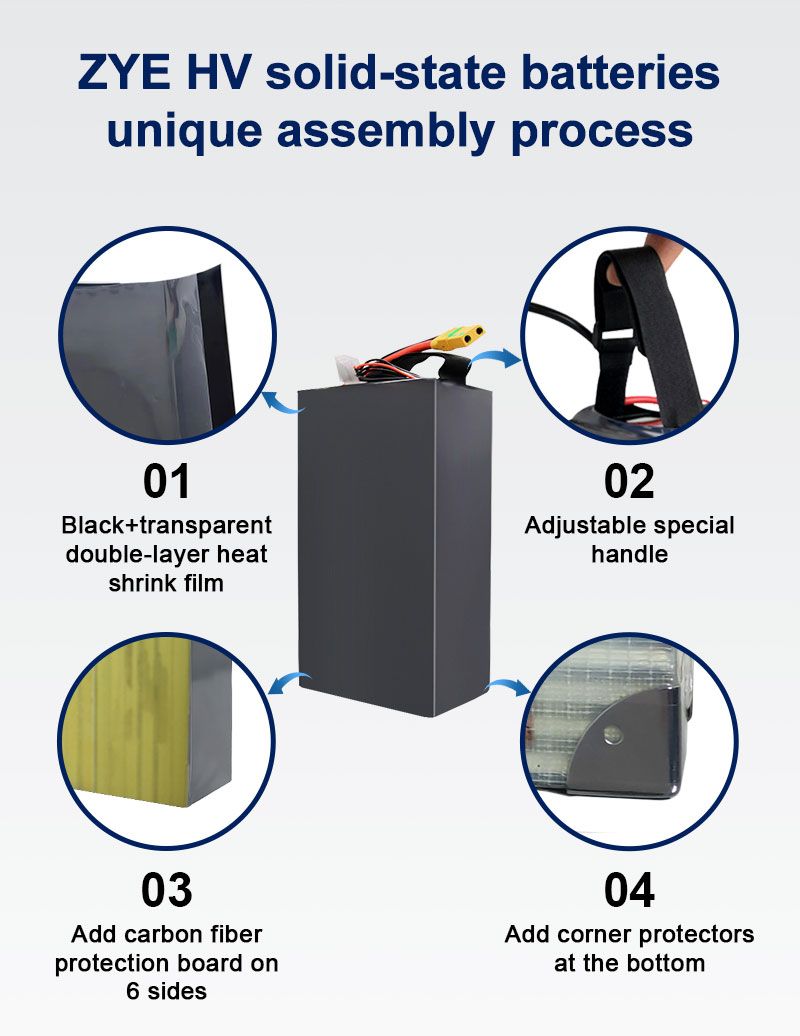
Generally, a semi solid state battery uses a gel or quasi-solid electrolyte rather than a fully solid ceramic, sulfide, or polymer material. The electrolyte has significantly higher viscosity than the liquid electrolytes in conventional LiPo batteries — closer to a gel or paste — but retains some liquid-like properties that allow better electrode contact than rigid solid electrolytes achieve.
Some semi solid state designs use a composite electrolyte: solid particles dispersed through a liquid or gel matrix. Others use polymer-gel electrolytes that are solid-like at room temperature but soft enough to conform to electrode surfaces during cycling.
What all of these share: more structural integrity than liquid LiPo electrolytes, less ionic conductivity limitation than some full solid state designs, and reduced (though not eliminated) flammability compared to conventional organic liquid electrolytes.
What Semi Solid State Batteries Actually Deliver
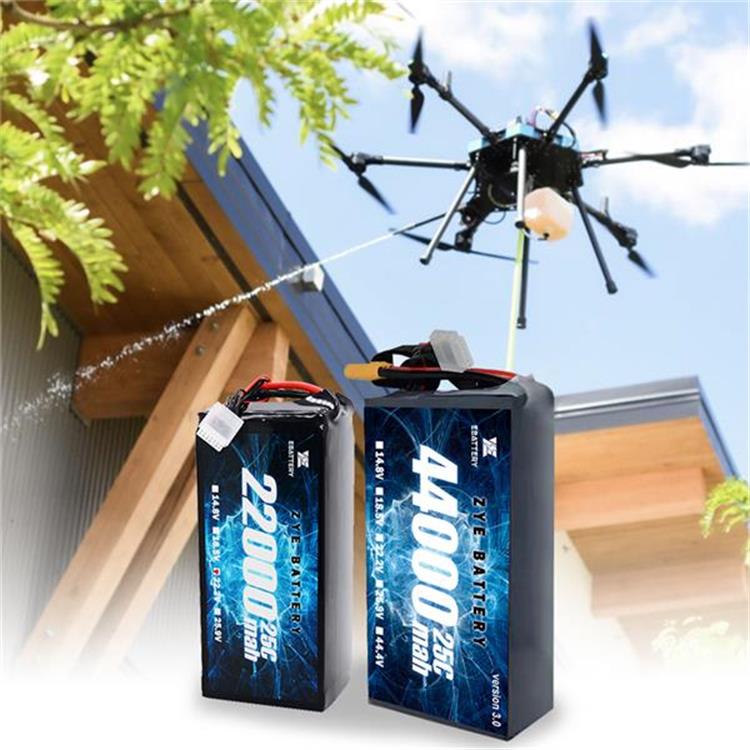
Improved safety over LiPo, though not equivalent to full solid state. The gel or quasi-solid electrolyte is significantly less flammable than liquid organic electrolytes. Thermal runaway risk is reduced — the pathway to ignition is harder to trigger and the reaction is slower to propagate. For UAV operators, this means better post-crash safety compared to LiPo, though a mechanically damaged semi solid state pack isn't as inert as a full solid state cell with ceramic electrolyte.
Better cycle life than standard LiPo. The more stable electrolyte environment reduces the electrode degradation mechanisms that limit LiPo cycle life. Commercial semi solid state UAV batteries are demonstrating 500 to 700 cycles at 80% capacity retention — better than the 300 to 500 typical of quality LiPo, though not reaching the 700 to 900 cycles of full solid state designs.
Energy density improvement, but moderate. Semi solid state batteries typically use graphite anodes rather than lithium metal — the electrolyte isn't rigid enough to reliably suppress lithium metal dendrite growth across all operating conditions. Pack-level energy density improvements over LiPo are real but incremental: expect 260 to 310 Wh/kg rather than the 330 to 400 Wh/kg achievable with full solid state lithium metal anode designs.
Better manufacturing compatibility with existing production lines. This is why semi solid state is commercially available at scale while full solid state remains more limited. Gel and polymer-gel electrolytes don't require the high-temperature sintering or moisture-controlled manufacturing environments that ceramic solid electrolytes demand. Lower production complexity means lower cost premium over LiPo.
Where Semi Solid State Falls Short of Full Solid State
The honest comparison: semi solid state batteries are a meaningful upgrade from LiPo but a partial implementation of what full solid state technology eventually delivers.
Flammability is reduced, not eliminated — the gel electrolyte still contains organic components that can combust under extreme conditions. Energy density improvements are real but don't reach the maximum potential of lithium metal anode architecture. Cycle life improvements are meaningful but stop short of full solid state longevity.
For UAV operators who need the maximum energy density and safety profile that solid state technology offers, full solid state is the target. For operators who want meaningful improvement over LiPo at lower cost and with established supply chain availability, semi solid state is a commercially sensible step in that direction.
ZYEBATTERY and the Transition to Solid State
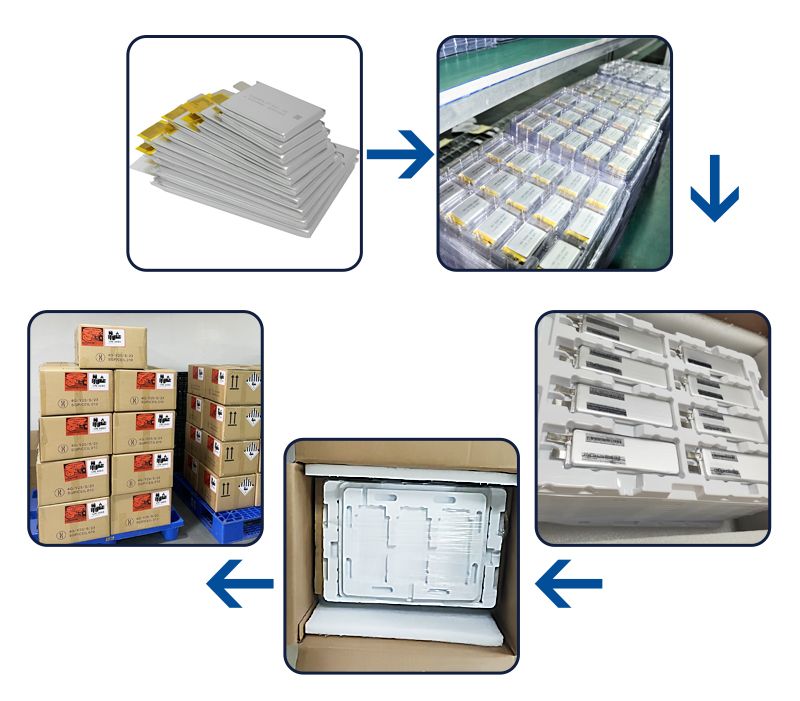
ZYEBATTERY develops solid state lithium ion and high-performance lithium polymer UAV batteries for commercial drone operations. Whether semi solid state, full solid state, or optimized LiPo is the right answer for your operation depends on your performance requirements, budget, and operating environment — and that's a question worth working through with a manufacturer who builds across the technology spectrum.
Send Inquiry



X
We use cookies to offer you a better browsing experience, analyze site traffic and personalize content. By using this site, you agree to our use of cookies.
Privacy Policy
News
 Will solid state batteries replace lithium ion?2026/11/09
Will solid state batteries replace lithium ion?
