 English
 Español
 Português
 русский
 Français
 日本語
 Deutsch
 tiếng Việt
 Italiano
 Nederlands
 ภาษาไทย
 Polski
 한국어
 Svenska
 magyar
 Malay
 বাংলা ভাষার
 Dansk
 Suomi
 हिन्दी
 Pilipino
 Türkçe
 Gaeilge
 العربية
 Indonesia
 Norsk
 تمل
 český
 ελληνικά
 український
 Javanese
 فارسی
 தமிழ்
 తెలుగు
 नेपाली
 Burmese
 български
 ລາວ
 Latine
 Қазақша
 Euskal
 Azərbaycan
 Slovenský jazyk
 Македонски
 Lietuvos
 Eesti Keel
 Română
 Slovenski
 मराठी
 Srpski језик

Call Us
+86-15768259626
Email Us
coco@zyepower.com

What materials are in solid state batteries?
What Materials Are in Solid State Batteries? A Practical Guide for UAV Operators
Battery marketing rarely names the materials inside the pack. Spec sheets show voltage, capacity, and cycle life — but not the specific compounds that determine whether those numbers hold up in real field conditions. For UAV operators trying to evaluate competing products or understand why 2 batteries with similar specs perform differently, knowing what materials are actually inside matters more than most procurement guides acknowledge.
Here's a straightforward breakdown of every significant material category in solid state UAV batteries and what each choice means for how the battery performs.

Cathode Materials: What Drives Voltage and Energy Output
The cathode is the positive electrode — the material that releases lithium ions during discharge. Cathode chemistry is 1 of the primary determinants of a battery's voltage, energy density, and thermal stability.
NMC (Lithium Nickel Manganese Cobalt Oxide): The most common cathode material in commercial UAV batteries, including most solid state designs. Higher nickel content (NMC 811: 80% nickel) increases energy density but reduces thermal stability. Lower nickel variants (NMC 622, NMC 532) offer better stability at some cost to energy density. NMC cathodes typically produce nominal voltages around 3.6 to 3.7V per cell.
NCA (Lithium Nickel Cobalt Aluminum Oxide): Higher energy density than standard NMC, used in high-performance applications. Contains no manganese, which changes the thermal behavior profile. Used by some solid state battery developers where maximum energy output is the priority.
LFP (Lithium Iron Phosphate): No nickel, no cobalt. Excellent cycle life, stable chemistry, lower cost, and better safety profile than NMC. Nominal voltage around 3.2V per cell — lower than NMC, which means lower energy density in conventional designs. Paired with lithium metal anodes in some next-generation solid state designs to compensate for the voltage deficit through anode-side energy density gains.

Anode Materials: The Split That Defines Energy Density Tiers
The anode is the negative electrode — where lithium ions are stored during charging.
Graphite: The default in conventional and first-generation solid state batteries. Stores lithium through intercalation between carbon layers. Capacity of approximately 372 mAh/g. Well-characterized, stable, widely available. Solid state batteries with graphite anodes deliver improved safety and cycle life over LiPo but similar energy density — typically 200 to 270 Wh/kg at pack level.
Lithium metal: The material that unlocks the highest energy density in solid state batteries. Stores approximately 10 times more lithium per gram than graphite. Only viable in solid state designs because solid electrolytes physically suppress the dendrite growth that makes lithium metal anodes unsafe in liquid-electrolyte cells. Enables pack-level energy densities of 350 to 400+ Wh/kg. Not universally available in commercial UAV formats in 2026 but increasingly accessible from specialized manufacturers.
Silicon-graphite composites: Emerging anode option blending silicon (higher capacity than graphite) with graphite (dimensional stability). Silicon expands significantly during lithium absorption — the graphite component moderates this. Some solid state battery designs use silicon-graphite anodes as a capacity improvement over pure graphite without the volumetric expansion challenges of pure silicon or tin.
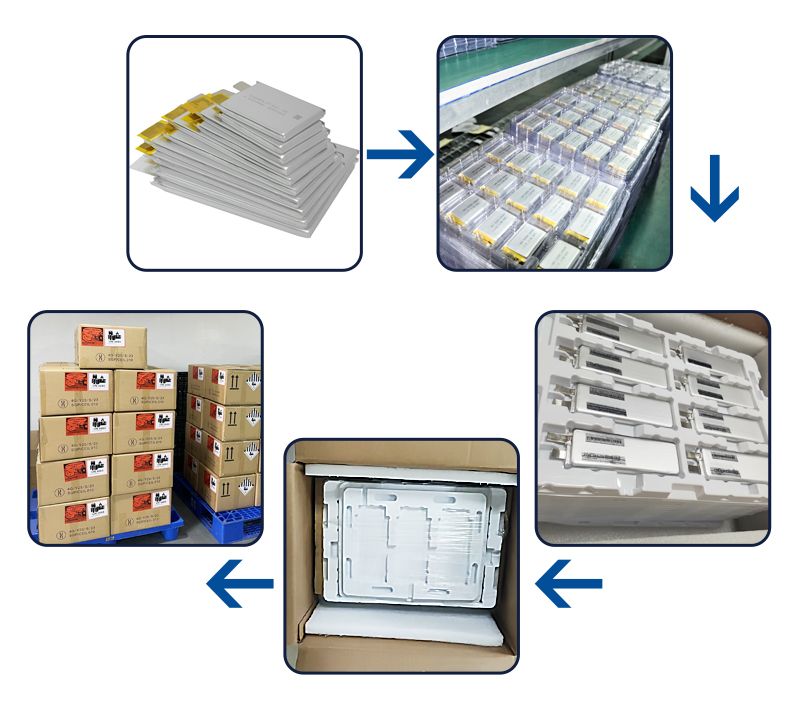
Solid Electrolyte Materials: The Defining Material Choice
Oxide-based (LLZO — Lithium Lanthanum Zirconium Oxide): Excellent chemical stability, wide electrochemical window. Requires high-temperature sintering (above 1000°C) during manufacturing — highest production cost of the 3 families. Best long-term stability profile.
Sulfide-based (LGPS, Li₆PS₅Cl argyrodites): Highest ionic conductivity of any solid electrolyte — comparable to liquid electrolytes. Moisture-sensitive, requires controlled manufacturing environments. Can produce hydrogen sulfide on exposure to water — a handling consideration in humid field conditions.
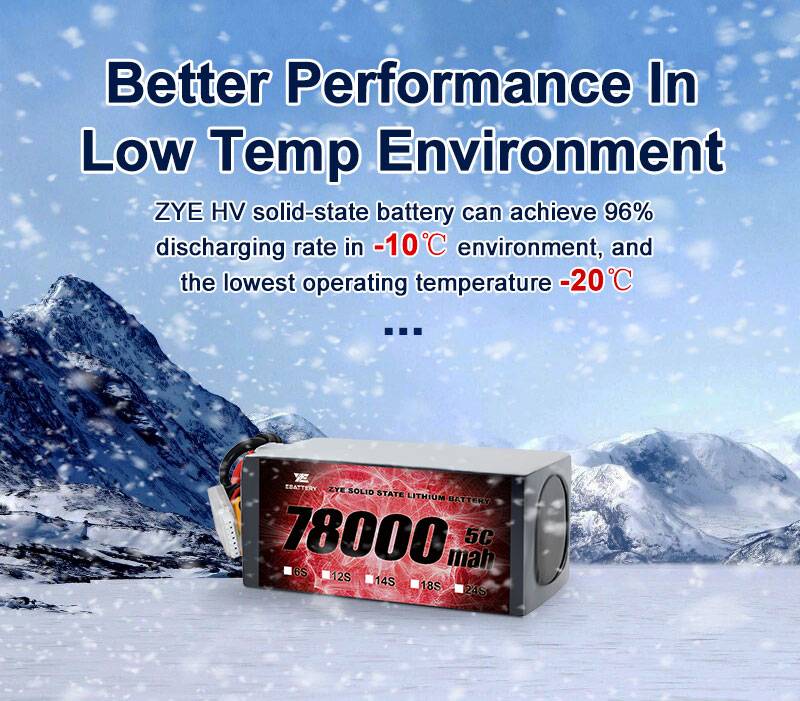
Polymer-based (PEO — Polyethylene Oxide based): Most manufacturing-friendly, processable at low temperatures. Lower ionic conductivity than oxide or sulfide types. Some formulations require elevated operating temperature for optimal ion transport — relevant for cold-weather UAV operations.
Current Collector Materials
Copper foil at the anode, aluminum foil at the cathode. These carry electrons between electrode materials and external terminals. Material purity and thickness affect internal resistance and overall pack efficiency. Rarely discussed in product marketing but directly relevant to discharge performance under high current demand.
ZYEBATTERY's Material Documentation
ZYEBATTERY provides cathode chemistry, anode architecture, and electrolyte family specifications for solid state lithium ion and high-performance lithium polymer UAV batteries. For procurement decisions where material composition affects performance, compliance, or supply chain due diligence, that documentation is part of standard product information — not something that requires a special request.
Send Inquiry



X
We use cookies to offer you a better browsing experience, analyze site traffic and personalize content. By using this site, you agree to our use of cookies.
Privacy Policy
News
 Will solid state batteries replace lithium ion?2026/11/09
Will solid state batteries replace lithium ion?
