English
 Español
  Português
  русский
  Français
  日本語
日本語  Deutsch
  tiếng Việt
  Italiano
  Nederlands
  ภาษาไทย
  Polski
  한국어
한국어  Svenska
  magyar
  Malay
Malay  বাংলা ভাষার
  Dansk
Dansk  Suomi
Suomi  हिन्दी
  Pilipino
  Türkçe
  Gaeilge
  العربية
  Indonesia
  Norsk
Norsk  تمل
تمل  český
český  ελληνικά
  український
  Javanese
  فارسی
فارسی  தமிழ்
தமிழ்  తెలుగు
  नेपाली
  Burmese
  български
  ລາວ
ລາວ  Latine
  Қазақша
  Euskal
  Azərbaycan
  Slovenský jazyk
  Македонски
  Lietuvos
  Eesti Keel
  Română
  Slovenski
  मराठी
मराठी  Srpski језик

Call Us
+86-15768259626
Email Us
coco@zyepower.com

Does a solid state battery use lithium?
Does a Solid State Battery Use Lithium?
Yes — But Not in the Same Way
Yes, solid state batteries use lithium. That part is straightforward. What's more interesting — and more useful for anyone trying to understand why solid state batteries perform differently from conventional ones — is how lithium is used, and what changes when you move from a liquid-electrolyte design to a solid one.
The difference isn't just engineering detail. It explains the performance claims you see in solid state battery marketing and helps you evaluate whether those claims apply to the specific battery you're considering.

Lithium's Role in Any Battery
In every lithium battery — solid state or conventional — lithium is the working ion. During charging, lithium ions leave the cathode (positive electrode), travel through the electrolyte, and are stored in the anode (negative electrode). During discharge, that process reverses: lithium ions move from anode back through the electrolyte to the cathode, and the energy released in that movement powers the drone.
The electrolyte's job is simply to let lithium ions pass through it while blocking electrons — which are forced to travel through the external circuit instead, powering the motors. Whether that electrolyte is liquid or solid, lithium is doing the same fundamental work.
What changes is where lithium is stored in the anode, and how efficiently that storage happens.
How Conventional Batteries Store Lithium at the Anode
In standard lithium polymer batteries, the anode is made of graphite. Lithium ions don't simply accumulate on graphite — they intercalate, meaning they slip between layers of carbon atoms in the graphite crystal structure. Each graphite unit can only hold a fixed number of lithium ions, determined by its crystal geometry.
This intercalation mechanism is stable and well-understood, but it sets a hard ceiling on how much lithium a graphite anode can store per gram of material. That ceiling is part of what limits the energy density of conventional LiPo batteries to roughly 200 to 260 Wh/kg at the pack level — no matter how good the rest of the design is.

How Solid State Batteries Can Use Lithium Differently
This is where solid state design creates a meaningful performance opportunity.
Because solid electrolytes can physically block dendrite penetration — the metallic filaments that make lithium metal anodes dangerous in liquid-electrolyte batteries — solid state batteries can replace graphite anodes with pure lithium metal.
Lithium metal doesn't intercalate. It plates and strips directly as bulk metal during charge and discharge. And lithium metal stores approximately 10 times more lithium ions per gram than graphite does.
The result: a solid state battery with a lithium metal anode doesn't hit the same energy density ceiling as a graphite-anode design. This is the architecture behind the 350 to 400+ Wh/kg pack-level energy density figures associated with advanced solid state batteries — numbers that aren't achievable with graphite anodes regardless of electrolyte type.
Why This Distinction Matters When Evaluating Products
Not all solid state batteries use lithium metal anodes. First-generation solid state designs often retain graphite anodes and only replace the electrolyte. Those batteries deliver improved safety and cycle life compared to LiPo — genuine advantages — but their energy density is similar to conventional lithium ion batteries, not dramatically higher.
When you see a solid state battery claiming 350+ Wh/kg, a lithium metal anode is behind that number. When you see one claiming 210 to 240 Wh/kg, it's almost certainly using graphite — the electrolyte changed, but the anode didn't.
For UAV operators choosing between solid state options, asking "does this battery use a lithium metal anode or graphite?" tells you immediately whether the energy density claims are based on the full solid state advantage or just the electrolyte substitution.
ZYEBATTERY's Anode Architecture Documentation
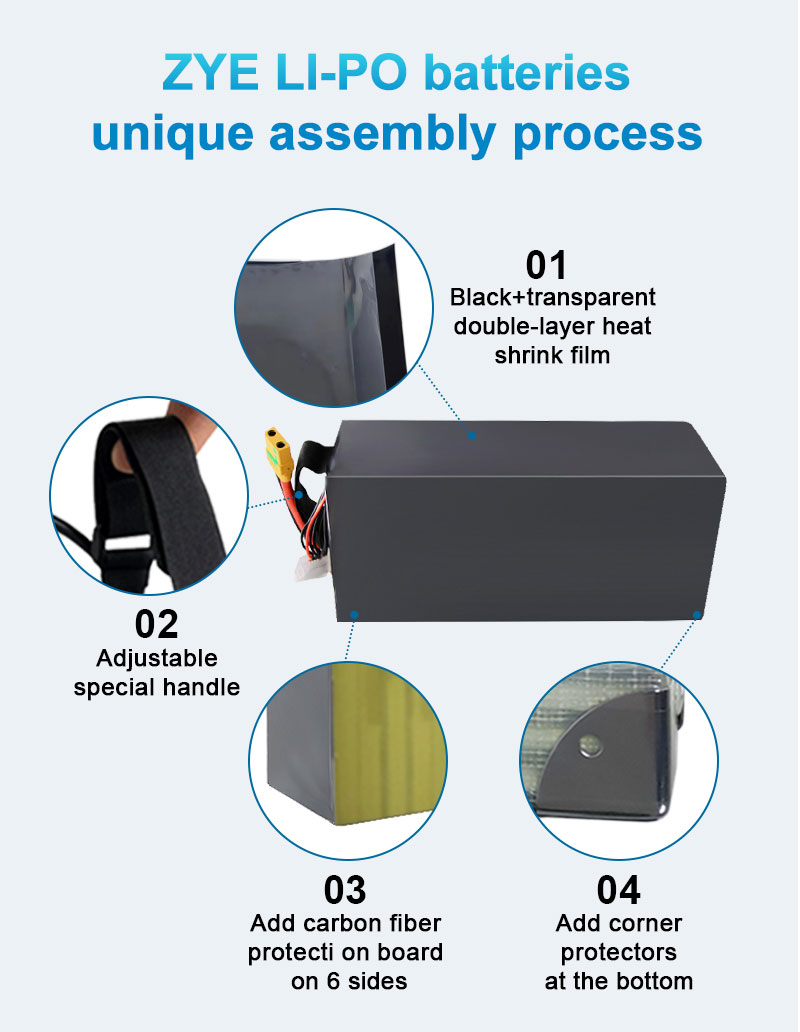
ZYEBATTERY provides anode architecture specifications for solid state lithium ion and high-performance lithium polymer UAV batteries — because knowing whether lithium metal or graphite is at the anode determines whether the energy density numbers on the spec sheet are from full solid state design or a hybrid approach.
Solid state batteries use lithium. The more useful question is where and how — and that question has a specific, documentable answer.
Previous:Do solid state batteries use nickel?
Send Inquiry



X
We use cookies to offer you a better browsing experience, analyze site traffic and personalize content. By using this site, you agree to our use of cookies.
Privacy Policy
News
 How to build a drone lipo battery pack?2025/08/28