English
 Español
  Português
  русский
  Français
  日本語
日本語  Deutsch
  tiếng Việt
  Italiano
  Nederlands
  ภาษาไทย
  Polski
  한국어
한국어  Svenska
  magyar
  Malay
Malay  বাংলা ভাষার
  Dansk
Dansk  Suomi
Suomi  हिन्दी
  Pilipino
  Türkçe
  Gaeilge
  العربية
  Indonesia
  Norsk
Norsk  تمل
تمل  český
český  ελληνικά
  український
  Javanese
  فارسی
فارسی  தமிழ்
தமிழ்  తెలుగు
  नेपाली
  Burmese
  български
  ລາວ
ລາວ  Latine
  Қазақша
  Euskal
  Azərbaycan
  Slovenský jazyk
  Македонски
  Lietuvos
  Eesti Keel
  Română
  Slovenski
  मराठी
मराठी  Srpski језик

Call Us
+86-15768259626
Email Us
coco@zyepower.com

Do solid state batteries use graphite?
Do Solid State Batteries Use Graphite?
The Answer Depends — and It Matters for UAV Performance
Most people who ask this question are trying to understand what's actually inside a solid state battery versus a conventional one. It's a reasonable thing to want to know, especially if you're making procurement decisions based on performance claims that reference energy density, cycle life, or charging capability.
The direct answer: some solid state batteries use graphite anodes, and some don't. Which type you're looking at significantly affects the performance advantages you can expect — and understanding the difference helps cut through the marketing language that often obscures what you're actually buying.
Why Graphite Matters in Conventional Lithium Batteries
In standard lithium polymer and lithium ion batteries, graphite is the default anode material. Lithium ions intercalate into the graphite structure during charging — essentially slipping between layers of carbon atoms — and release back out during discharge. Graphite is abundant, relatively inexpensive, well-characterized, and has been the industry standard anode material for 30 years.
The limitation of graphite is its energy storage ceiling. Each graphite unit can only accommodate a fixed number of lithium ions based on its crystal structure. That limit sets a ceiling on the energy density of any battery using graphite anodes — roughly 200 to 260 Wh/kg at the pack level for quality lithium polymer batteries currently in production.
First-Generation Solid State: Graphite Anodes Still Present
The first commercially viable solid state batteries — including many currently available solid state UAV batteries — keep graphite anodes and replace only the electrolyte. The liquid organic electrolyte is swapped for a solid material, but the electrode architecture remains recognizable.
This approach is practical because it allows manufacturers to adapt existing electrode manufacturing processes rather than developing entirely new ones. The solid electrolyte still delivers meaningful safety and cycle life improvements over liquid-electrolyte equivalents — removing the thermal runaway risk from flammable liquid electrolyte and reducing the SEI formation that degrades graphite anodes in LiPo cells over time.
What this design doesn't deliver is the maximum energy density advantage associated with solid state technology. With graphite anodes, the energy storage ceiling is similar to conventional lithium ion batteries. Pack-level energy density improvements come primarily from electrolyte weight reduction and tighter packaging rather than fundamentally higher anode capacity.
Next-Generation Solid State: Lithium Metal Anodes Without Graphite
The version of solid state battery technology that delivers the energy density numbers appearing in industry headlines replaces graphite entirely with lithium metal anodes.
Lithium metal stores approximately 10 times more energy per gram than graphite. A battery with a lithium metal anode instead of a graphite anode can theoretically achieve dramatically higher energy density — which is where the 350 to 400+ Wh/kg figures for advanced solid state batteries come from.
The solid electrolyte is essential for this design. In liquid-electrolyte batteries, lithium metal anodes create dendrite growth — metallic filaments that eventually cause short circuits. Solid electrolytes provide a physical barrier that suppresses dendrite penetration, making lithium metal anodes viable in a way they're not in conventional lithium polymer cells.
This is the architecture that delivers both the energy density advantage and the safety profile improvement associated with solid state batteries at their most capable.
What This Means When Evaluating Solid State UAV Batteries
When a manufacturer describes their product as a "solid state battery," the graphite question is worth asking specifically:
Does this battery use a graphite anode or a lithium metal anode?
A graphite-anode solid state battery delivers improved safety and cycle life over LiPo — meaningful advantages — but not the maximum energy density improvement the technology is capable of. A lithium metal-anode solid state battery delivers the full energy density advantage alongside the safety improvements.
For UAV operators where endurance is the primary constraint, this distinction determines whether the solid state upgrade actually extends flight time meaningfully or primarily improves safety and longevity without changing the energy equation.
ZYEBATTERY's Solid State UAV Battery Architecture
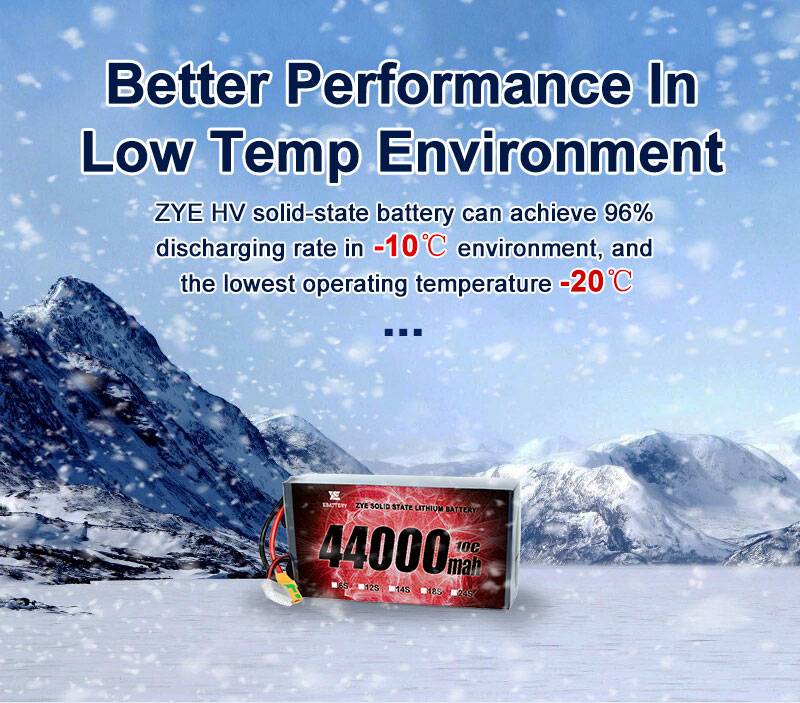
ZYEBATTERY develops solid state lithium ion UAV batteries with documented anode architecture — because for operators comparing energy density claims across suppliers, knowing whether those claims are based on graphite or lithium metal anode design is part of understanding what you're actually buying.
The graphite question has a specific answer for every solid state battery. Make sure you have it before making the purchase decision.
Previous:Do solid state batteries degrade?
Send Inquiry



X
We use cookies to offer you a better browsing experience, analyze site traffic and personalize content. By using this site, you agree to our use of cookies.
Privacy Policy
News
 How to build a drone lipo battery pack?2025/08/28