English
 Español
  Português
  русский
  Français
  日本語
日本語  Deutsch
  tiếng Việt
  Italiano
  Nederlands
  ภาษาไทย
  Polski
  한국어
한국어  Svenska
  magyar
  Malay
Malay  বাংলা ভাষার
  Dansk
Dansk  Suomi
Suomi  हिन्दी
  Pilipino
  Türkçe
  Gaeilge
  العربية
  Indonesia
  Norsk
Norsk  تمل
تمل  český
český  ελληνικά
  український
  Javanese
  فارسی
فارسی  தமிழ்
தமிழ்  తెలుగు
  नेपाली
  Burmese
  български
  ລາວ
ລາວ  Latine
  Қазақша
  Euskal
  Azərbaycan
  Slovenský jazyk
  Македонски
  Lietuvos
  Eesti Keel
  Română
  Slovenski
  मराठी
मराठी  Srpski језик

Call Us
+86-15768259626
Email Us
coco@zyepower.com

Do solid state batteries degrade?
Do Solid State Batteries Degrade? Yes — But Differently Than You Might Expect
Every battery degrades. Anyone selling you a battery that doesn't isn't selling you a battery — they're selling you a story. The real question for UAV operators isn't whether solid state batteries degrade, but how they degrade, how fast, and whether that degradation pattern is better or worse for commercial operations than what you're used to with lithium polymer packs.
The answers to all 3 are more useful than a simple yes or no.
How Conventional LiPo Batteries Degrade
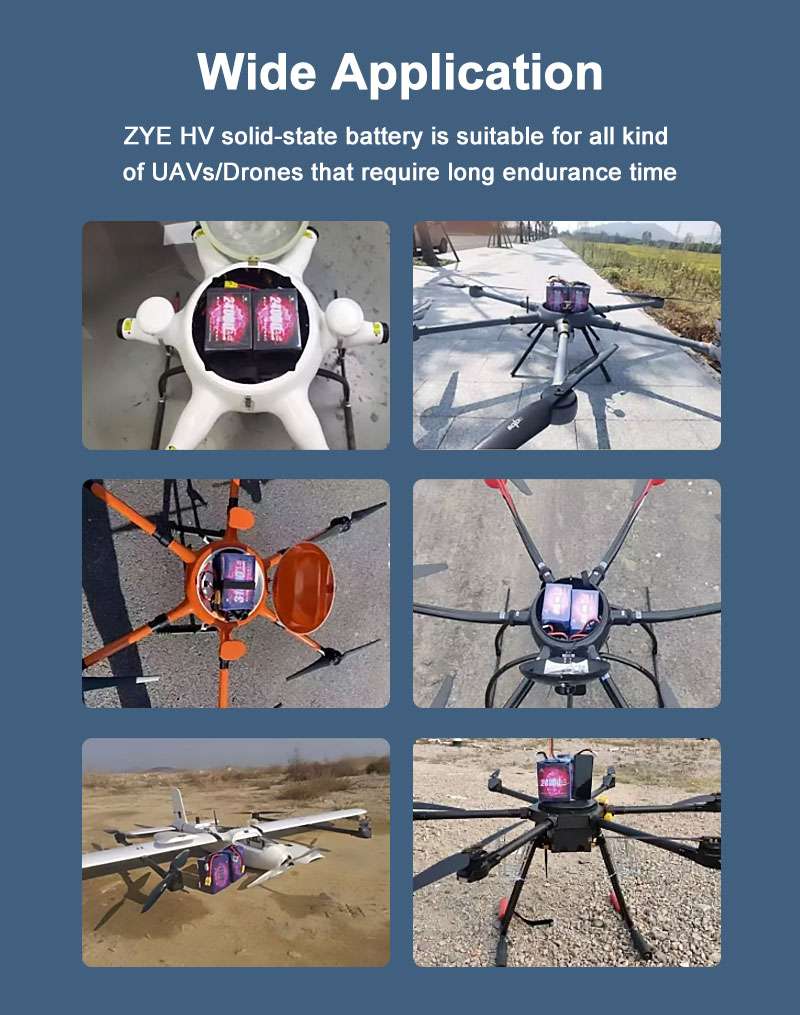
To understand why solid state degradation is different, it helps to know the primary mechanisms that limit LiPo battery life.
Electrolyte oxidation is the dominant long-term degradation pathway in most LiPo cells. The liquid organic electrolyte reacts slowly with electrode surfaces over repeated charge-discharge cycles, forming a layer called the solid electrolyte interphase (SEI). This layer gradually increases internal resistance and consumes lithium that can no longer participate in energy storage — reducing capacity cycle by cycle.
Lithium plating occurs during fast charging or low-temperature charging, when lithium ions arrive at the graphite anode faster than they can be absorbed. Metallic lithium deposits on the anode surface, reducing capacity and increasing the risk of internal short circuits over time.
Cathode structural fatigue happens as repeated expansion and contraction of electrode materials during cycling causes microscopic cracking in cathode particles — reducing the surface area available for ion exchange and progressively limiting capacity.
All 3 of these mechanisms compound. A LiPo pack at 400 cycles isn't just older — it's accumulated damage from all 3 pathways simultaneously.
How Solid State Batteries Degrade Differently
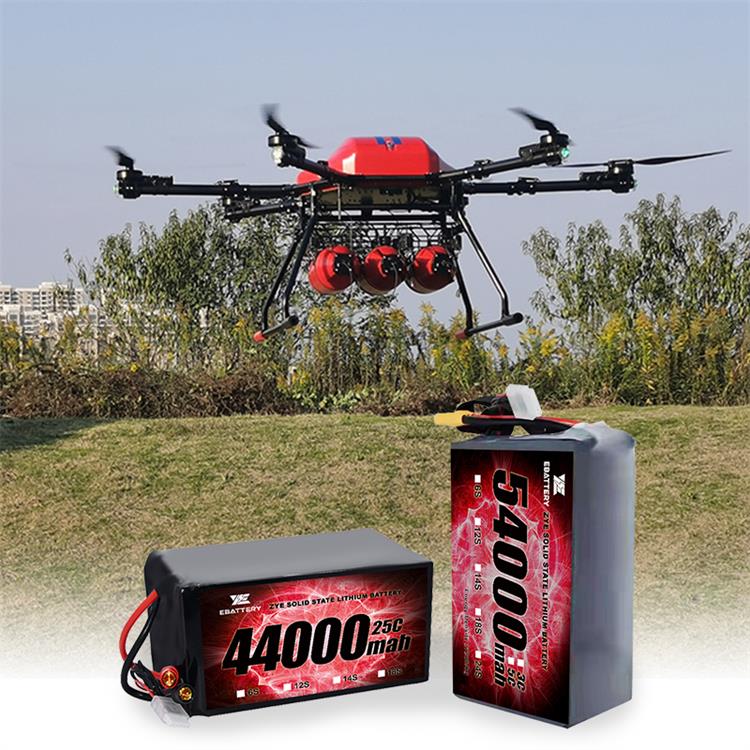
The removal of liquid electrolyte changes which degradation mechanisms are active and how quickly they progress.
Electrolyte oxidation is dramatically reduced. Solid electrolytes don't react with electrode surfaces the same way liquid electrolytes do. The SEI formation that consumes lithium capacity in LiPo cells either doesn't form or forms far more slowly in solid state cells. This is the primary reason solid state batteries demonstrate better capacity retention over more cycles — they're not losing lithium to SEI growth at the same rate.
Lithium plating dynamics change. In solid state cells using lithium metal anodes, lithium plates and strips inherently as part of normal operation. The solid electrolyte provides a physical barrier against dendrite penetration that liquid electrolytes can't — which theoretically allows faster charging without the same plating-related degradation risk that limits LiPo charge rates.
A new degradation mechanism emerges: interface delamination. This is the challenge specific to solid state chemistry. As electrodes expand and contract during cycling, the solid electrolyte doesn't flow to maintain contact the way a liquid electrolyte does. Microscopic gaps can develop between electrode and electrolyte surfaces — increasing resistance and reducing ion transfer efficiency. In current-generation solid state UAV batteries, this interface management is one of the primary engineering challenges affecting cycle life.
What This Means for UAV Operators in Practice
The net effect of these different degradation mechanisms: solid state batteries in commercial UAV applications typically demonstrate slower capacity fade per cycle than equivalent LiPo packs — 600 to 900 cycles at 80% capacity retention versus 300 to 500 for LiPo under comparable conditions.
But the degradation isn't invisible or zero. Solid state packs do lose capacity over time. The rate is slower, the mechanisms are different, and the end-of-life behavior is generally more predictable — but operators planning replacement schedules still need to account for degradation rather than assuming solid state packs run forever.
The more predictable degradation curve of solid state batteries is actually useful for fleet management. Capacity fade in solid state cells tends to be more linear and less prone to the sudden drops that aging LiPo packs sometimes exhibit when accumulated SEI damage reaches a threshold. That linearity makes replacement timing easier to plan.
ZYEBATTERY's Degradation Documentation
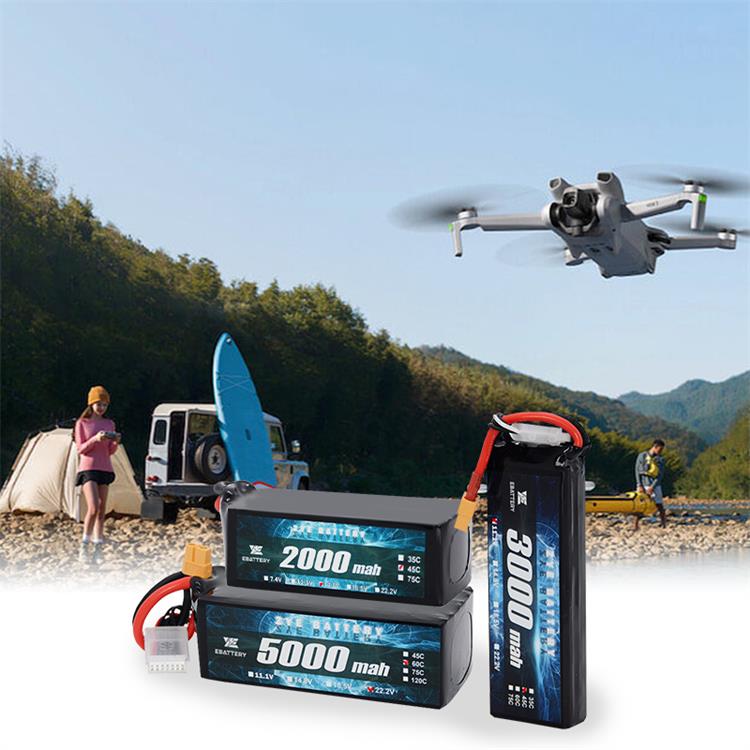
ZYEBATTERY provides cycle life and capacity retention data for solid state lithium ion and high-performance lithium polymer UAV batteries based on real operating condition testing — not just laboratory ideals. For operators building replacement budgets and fleet management schedules, knowing the actual degradation curve matters as much as knowing the starting performance.
Solid state batteries degrade. They just do it slower, more predictably, and for different reasons than the LiPo packs most operators are used to replacing.
Send Inquiry



X
We use cookies to offer you a better browsing experience, analyze site traffic and personalize content. By using this site, you agree to our use of cookies.
Privacy Policy
News
 How to build a drone lipo battery pack?2025/08/28