English
 Español
  Português
  русский
  Français
  日本語
日本語  Deutsch
  tiếng Việt
  Italiano
  Nederlands
  ภาษาไทย
  Polski
  한국어
한국어  Svenska
  magyar
  Malay
Malay  বাংলা ভাষার
  Dansk
Dansk  Suomi
Suomi  हिन्दी
  Pilipino
  Türkçe
  Gaeilge
  العربية
  Indonesia
  Norsk
Norsk  تمل
تمل  český
český  ελληνικά
  український
  Javanese
  فارسی
فارسی  தமிழ்
தமிழ்  తెలుగు
  नेपाली
  Burmese
  български
  ລາວ
ລາວ  Latine
  Қазақша
  Euskal
  Azərbaycan
  Slovenský jazyk
  Македонски
  Lietuvos
  Eesti Keel
  Română
  Slovenski
  मराठी
मराठी  Srpski језик

Call Us
+86-15768259626
Email Us
coco@zyepower.com

5 Factors When Buying Lithium Polymer Battery?
Choosing the right lithium polymer battery is not just about picking the biggest pack. The best battery is the one that fits your drone, your flight style, and your budget without creating problems later.
1. Voltage and cell count
Voltage is the first thing to check when buying a lithium polymer battery. It must match the motor and ESC setup on your drone, or performance will suffer. A 3S pack is common for lighter builds, while 6S is more popular for higher-performance UAVs.
If the voltage is wrong, the drone may feel underpowered or become too aggressive to control. That is why voltage should always come before capacity or price in the buying decision.
2. Capacity and flight time
Capacity, usually shown in mAh, tells you how much energy the battery can hold. In simple terms, a larger capacity usually means longer flight time. But there is a catch: more capacity also means more weight.
For drones, extra weight can reduce efficiency and sometimes cancel out the benefit of the bigger pack. The smart choice is to find the balance between flight time and total takeoff weight, instead of simply buying the biggest battery available.
3. Discharge rate
The discharge rate, or C rating, shows how much current the battery can safely deliver. This is especially important for FPV drones, racing drones, and industrial UAVs that need strong bursts of power.
A low C rating may cause voltage sag, weak acceleration, and poor throttle response. A higher C rating gives the drone more punch, but the pack must still be a good fit for the build. In other words, the battery should supply power smoothly, not just look impressive on paper.
4. Battery size and weight
A lithium polymer battery must physically fit the drone. If it is too large, it may not fit the battery bay or may affect the center of gravity. If it is too heavy, it can reduce flight time and make the drone harder to handle.
This is one of the most overlooked buying factors. Many people focus only on capacity and forget that a heavier battery can make the drone work harder just to stay in the air. Always check both dimensions and weight before placing an order.
5. Quality, safety, and brand support
Not all lithium polymer batteries are made the same. A well-built battery usually lasts longer, delivers more stable power, and has fewer safety problems. Cheap packs may save money at the start, but they often wear out faster or perform poorly under load.
It also helps to buy from a manufacturer that understands drone use. A good supplier can recommend the right voltage, capacity, and discharge rating for your application. That support can save time, reduce mistakes, and improve long-term reliability.
What drone buyers should remember
When buying a lithium polymer battery, the goal is not to buy the most powerful or most expensive pack. The goal is to choose the one that best matches the drone’s mission. For a small training drone, that may mean a lighter pack with modest capacity. For an FPV racer or industrial UAV, it may mean a higher-discharge pack with stronger voltage stability.
If you focus on voltage, capacity, discharge rate, size, and quality, you will make a much better buying decision. Those five factors are the ones that truly shape performance, safety, and battery life.
Why this matters for ZYEBATTERY
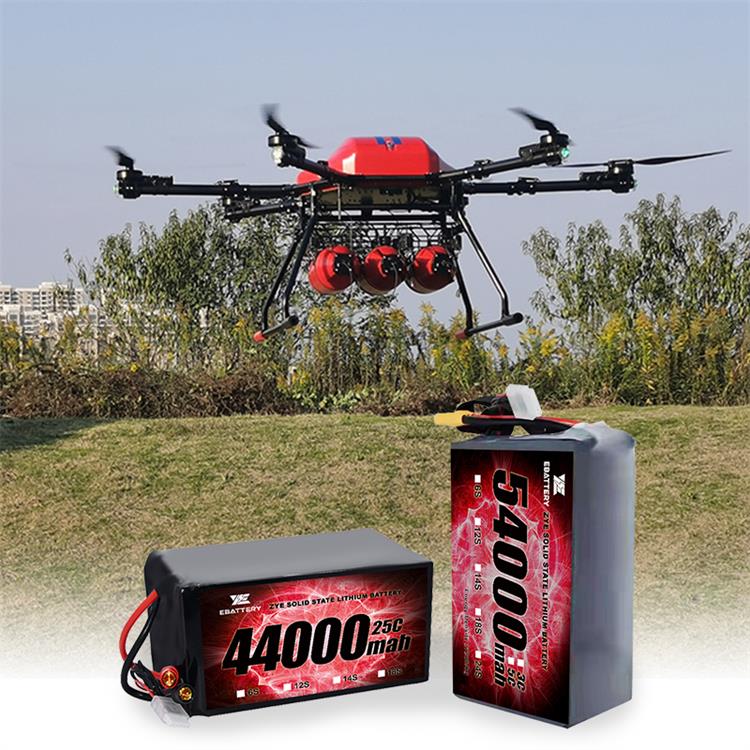
For ZYEBATTERY, this topic is a strong way to educate customers while showing product expertise. The message is simple: a good lithium polymer battery is not chosen by price alone. It is chosen by how well it fits the drone and the job.
That is why professional buyers often work with a manufacturer that can provide both high-performance LiPo and solid-state lithium-ion solutions. It gives them more flexibility and a better chance of finding the right battery for the mission.
Send Inquiry



X
We use cookies to offer you a better browsing experience, analyze site traffic and personalize content. By using this site, you agree to our use of cookies.
Privacy Policy
News
 How to build a drone lipo battery pack?2025/08/28