English
 Español
  Português
  русский
  Français
  日本語
日本語  Deutsch
  tiếng Việt
  Italiano
  Nederlands
  ภาษาไทย
  Polski
  한국어
한국어  Svenska
  magyar
  Malay
Malay  বাংলা ভাষার
  Dansk
Dansk  Suomi
Suomi  हिन्दी
  Pilipino
  Türkçe
  Gaeilge
  العربية
  Indonesia
  Norsk
Norsk  تمل
تمل  český
český  ελληνικά
  український
  Javanese
  فارسی
فارسی  தமிழ்
தமிழ்  తెలుగు
  नेपाली
  Burmese
  български
  ລາວ
ລາວ  Latine
  Қазақша
  Euskal
  Azərbaycan
  Slovenský jazyk
  Македонски
  Lietuvos
  Eesti Keel
  Română
  Slovenski
  मराठी
मराठी  Srpski језик

Call Us
+86-15768259626
Email Us
coco@zyepower.com

5 Tricks to Extend Your Lipo Drone Battery’s Lifespan & Performance
Let’s face it, nothing cuts a flying session short or hurts your wallet like a drone battery that’s lost its zest. One day it’s giving you a solid 25 minutes, the next it’s puffing up and begging for retirement after 15. If you’re using your drone for business—be it mapping, inspection, or filming—every flight minute and every battery cycle counts toward your bottom line.
The good news? A lot of premature Lipo drone battery failure isn’t about the chemistry itself; it’s about how we treat it. With a few smart habits, you can seriously boost your pack’s lifespan and performance, keeping it flying stronger for longer. Here are five practical, no-nonsense tricks that actually work.
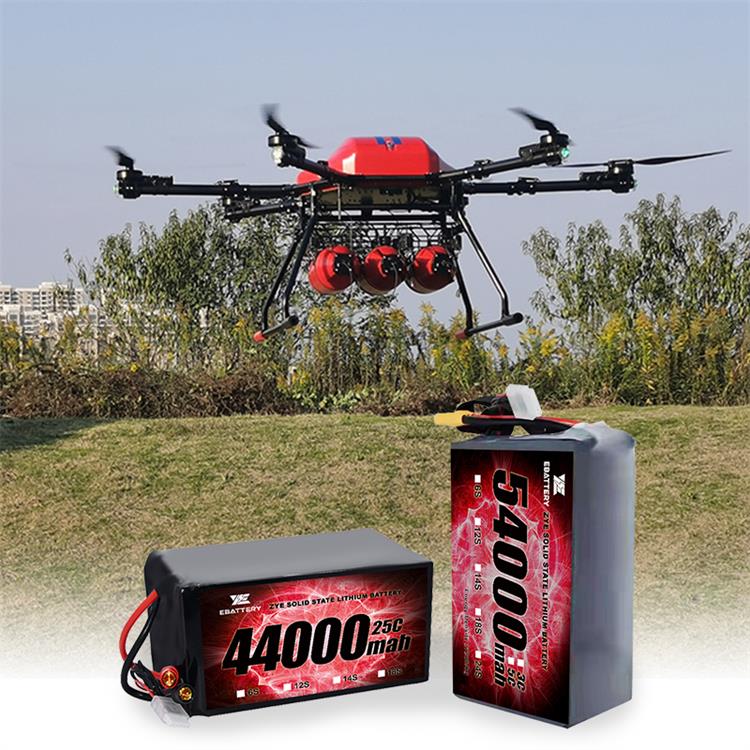
Trick #1: Master the Storage Charge (The 40-60% Rule)
This is the golden rule for extending your Lipo battery's life. Lithium polymer cells hate two things: being stored fully charged (4.2V per cell) or completely empty.
Why it works: Storing at full voltage stresses the chemistry, accelerating internal resistance growth. Storing fully drained can permanently damage cells.
What to do: If you’re not flying for more than 48 hours, use your smart charger’s “Storage” mode. This will safely bring (or keep) each cell at about 3.8V-3.85V. Think of it as putting your battery into a light, healthy hibernation. Making this a habit is the single biggest favor you can do for your drone battery's long-term health.
Trick #2: Be Gentle on the Temps – Hot & Cold are Foes
Temperature is a silent killer of performance and lifespan.
Never Charge a Hot Battery: Just landed? The battery is warm. Let it cool down to ambient temperature before you plug it into the charger. Charging while hot is a fast track to cell degradation and a major safety risk.
Avoid Flying in Extreme Cold: In freezing conditions, keep batteries warm (inside your jacket) until right before takeoff. Flying with a cold battery will cause dramatic voltage sag, reducing power and potentially triggering a low-voltage cutoff mid-flight. Likewise, don’t leave batteries in a hot car. Consistent exposure to high heat cooks them from the inside out.
Trick #3: The Gentle Landing (Avoid Deep Discharge)
It’s tempting to squeeze out every last second of airtime. Don’t. Regularly draining your Lipo battery down to its absolute minimum (like 3.0V per cell or lower) is incredibly stressful.
Set a Conservative Alarm: Program your drone’s low-battery warning to trigger at 20-25% remaining. Land promptly when it alerts. Your goal should be to have each cell around 3.5V-3.6V when you land. This greatly reduces strain and preserves the battery's capacity over hundreds of cycles.
Trick #4: Balance Charge, Every Single Time
That “Balance Charge” setting on your charger isn’t optional for pros. It’s essential.
Why it’s critical: Over multiple flights, the individual cells inside your pack can drift to slightly different voltage levels. A standard “Fast Charge” ignores this. A Balance Charge slowly brings all cells to the same, precise peak voltage (4.20V). This prevents any single cell from being over-stressed, which is key for safety, stability, and maximizing cycle life. Always balance charge.
Trick #5: Regular Health Checks & Proper Retirement
Be a detective. Inspect your batteries before and after each flight.
Check for Physical Damage: Look for any swelling (puffing), dents, or damaged wires/connectors. A puffy battery is a warning sign—stop using it and dispose of it safely.
Monitor Internal Resistance (IR): If your charger can measure it, keep an eye on each cell’s Internal Resistance. A gradual rise is normal, but a sudden jump in one cell indicates it’s failing. Consistently high IR means the battery has to work harder, reducing performance and creating more heat.

The Foundation of It All: Start with a Superior Battery
All these tricks are most effective when you begin with a well-engineered pack. Premium batteries from a dedicated drone battery manufacturer like us at ZYEBATTERY are built with these realities in mind.
Our high-performance LiPo batteries start with rigorously matched, high-grade cells and feature sophisticated Battery Management Systems (BMS) that aid in balance and protection. They are constructed to better handle the rigors of extreme environments, giving you a stronger, more reliable foundation to apply these care techniques. For the next leap in safety and longevity, our developing solid-state lithium-ion solutions are engineered to be even more robust.
Great care habits paired with a superior battery is the ultimate combo for extending your drone's flight time and your investment.
Putting these five tricks into practice will make a visible difference in your hangar. But it all starts with a quality pack. If you’re looking for batteries built with the durability and intelligence to support a long, productive service life, you’re looking for ZYEBATTERY.
Want to see and feel the difference a professionally engineered battery makes? Reach out to our team to discuss your needs or inquire about testing a sample. Let’s keep your missions flying longer and your operations running smoother.
Send Inquiry



X
We use cookies to offer you a better browsing experience, analyze site traffic and personalize content. By using this site, you agree to our use of cookies.
Privacy Policy
News
 How to build a drone lipo battery pack?2025/08/28