English
 Español
  Português
  русский
  Français
  日本語
日本語  Deutsch
  tiếng Việt
  Italiano
  Nederlands
  ภาษาไทย
  Polski
  한국어
한국어  Svenska
  magyar
  Malay
Malay  বাংলা ভাষার
  Dansk
Dansk  Suomi
Suomi  हिन्दी
  Pilipino
  Türkçe
  Gaeilge
  العربية
  Indonesia
  Norsk
Norsk  تمل
تمل  český
český  ελληνικά
  український
  Javanese
  فارسی
فارسی  தமிழ்
தமிழ்  తెలుగు
  नेपाली
  Burmese
  български
  ລາວ
ລາວ  Latine
  Қазақша
  Euskal
  Azərbaycan
  Slovenský jazyk
  Македонски
  Lietuvos
  Eesti Keel
  Română
  Slovenski
  मराठी
मराठी  Srpski језик

Call Us
+86-15768259626
Email Us
coco@zyepower.com

What Materials Are Inside a Solid-State Drone Battery? A Practical Breakdown
If you're deep into FPV drones or commercial drone operations, you've heard the buzz: solid-state drone batteries are the future. Promising greater safety, longer life, and higher energy density, they sound like a game-changer. But what exactly are they made of? How do they differ from the common lithium polymer (LiPo) batteries we use today?
Let's break down the key materials inside a solid-state battery and why they matter for your drone's performance.
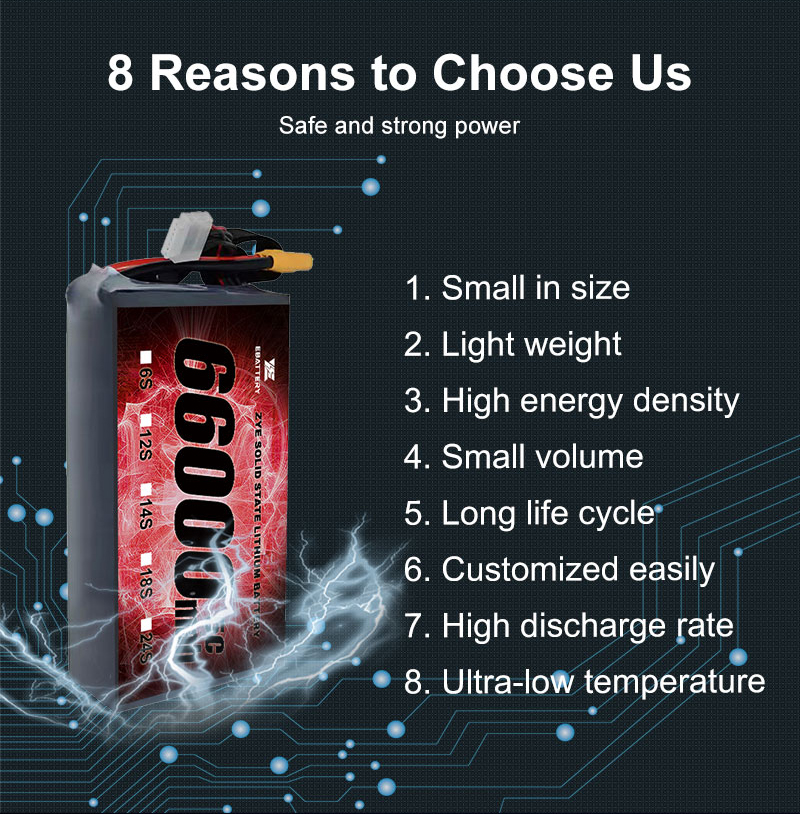
The Core Difference: Solid vs. Liquid
First, a quick primer. A standard LiPo battery has a liquid or gel-like electrolyte. This flammable electrolyte is a primary source of risk (think swelling, fires). A solid-state battery, as the name shouts, uses a solid electrolyte. This single change triggers a cascade of material innovations.
Key Material Components of a Solid-State Drone Battery
1. The Solid Electrolyte (The Heart of the Innovation)
This is the defining material. It must conduct lithium ions well while being an electronic insulator. Common types being researched include:
Ceramics: Materials like LLZO (Lithium Lanthanum Zirconium Oxide). They offer high ionic conductivity and excellent stability, making them very safe from thermal runaway—a huge plus for drone batteries that can experience crash damage.
Solid Polymers: Think advanced versions of materials used in some existing batteries. They are more flexible and easier to manufacture but often need to operate at warmer temperatures.
Sulfide-Based Glasses: These have fantastic ion conductivity, rivaling liquid electrolytes. However, they can be sensitive to moisture during manufacturing.
For Pilots: The solid electrolyte is why these batteries are inherently safer and can potentially handle faster charging without the risks associated with liquid electrolytes.
2. The Electrodes (Anode & Cathode)
The materials here can be pushed further because the solid electrolyte is more stable.
Anode (Negative Electrode): Researchers can use metallic lithium. This is a huge deal. In today's LiPos, the anode is typically graphite. Using pure lithium metal can dramatically increase the energy density of a solid-state drone battery—meaning more flight time for the same weight or the same power in a smaller, lighter pack.
Cathode (Positive Electrode): This can be similar to today's high-performance batteries (e.g., NMC - Lithium Nickel Manganese Cobalt Oxide), but optimized to work efficiently with the solid electrolyte interface.
For Pilots: The lithium metal anode is the secret sauce for the promised "2x flight time" headlines. Lighter, energy-dense packs could revolutionize drone design.
3. Interface Layers & Advanced Composites
This is the engineering challenge. Getting a perfect, stable interface between the brittle solid electrolyte and the electrodes is tough. Materials science here involves:
Protective Coatings: Ultra-thin layers applied to electrodes to prevent unwanted reactions.
Composite Electrolytes: Sometimes a mix of ceramic and polymer materials is used to balance conductivity, flexibility, and manufacturing ease.
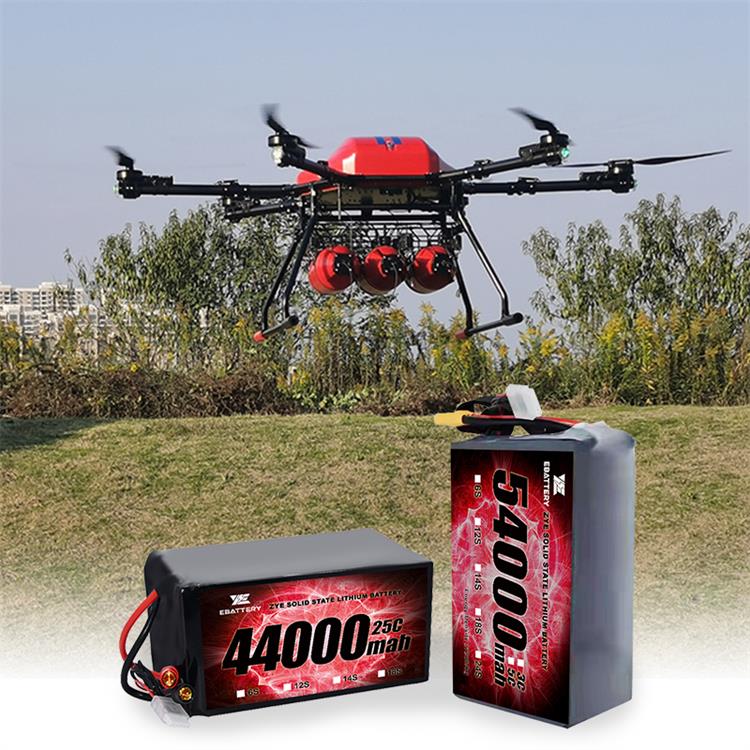
Why Do These Materials Matter for Your Drone?
When you see "solid-state battery for drone" applications, the material choice translates directly to user benefits:
Safety First: No flammable liquid = dramatically reduced fire risk. This is critical for commercial operations and anyone transporting batteries.
Higher Energy Density: The lithium metal anode material is the key. Expect potentially longer flight times or lighter craft.
Longer Cycle Life: Solid electrolytes are often more chemically stable, which can mean batteries that last hundreds more charge cycles before degrading.
Faster Charging Potential: The materials can, in theory, support much faster ion transfer without the plating and dendrite issues that plague liquid LiPos.
The Current State of Play
It's important to be realistic. While the materials in solid-state batteries are well-understood in labs, mass-producing them at a cost and scale suitable for the drone industry is still underway. The challenges are perfecting the interfaces and manufacturing processes.
True solid-state drone batteries are mostly in the prototyping and testing phase. When they do hit the market, they will likely appear in high-end commercial and enterprise applications first.
Conclusion
The materials inside a solid-state battery—the solid ceramic or polymer electrolyte, the lithium metal anode, and the advanced composite interfaces—are engineered to solve the core limitations of today's LiPos. They promise a future of safer, longer-lasting, and more powerful flights.
As a drone pilot or operator, staying informed about these advancements is key. The shift to solid-state technology won't happen overnight, but understanding the material science behind it helps you cut through the hype and anticipate the real-world performance benefits on the horizon.
Send Inquiry



X
We use cookies to offer you a better browsing experience, analyze site traffic and personalize content. By using this site, you agree to our use of cookies.
Privacy Policy
News
 How to build a drone lipo battery pack?2025/08/28