English
 Español
  Português
  русский
  Français
  日本語
日本語  Deutsch
  tiếng Việt
  Italiano
  Nederlands
  ภาษาไทย
  Polski
  한국어
한국어  Svenska
  magyar
  Malay
Malay  বাংলা ভাষার
  Dansk
Dansk  Suomi
Suomi  हिन्दी
  Pilipino
  Türkçe
  Gaeilge
  العربية
  Indonesia
  Norsk
Norsk  تمل
تمل  český
český  ελληνικά
  український
  Javanese
  فارسی
فارسی  தமிழ்
தமிழ்  తెలుగు
  नेपाली
  Burmese
  български
  ລາວ
ລາວ  Latine
  Қазақша
  Euskal
  Azərbaycan
  Slovenský jazyk
  Македонски
  Lietuvos
  Eesti Keel
  Română
  Slovenski
  मराठी
मराठी  Srpski језик

Call Us
+86-15768259626
Email Us
coco@zyepower.com

Advancements in Drone Solid State Batteries and Energy Efficiency
Solid-State Drone Batteries: Everything You Need to Know for Professional UAV Operations
Drone technology has evolved by leaps and bounds over the past few years, and if there’s one component that makes or breaks a UAV’s performance, it’s the battery. For professionals relying on drones for industrial tasks, cinematography, or mapping, power storage isn’t just about flight time—it’s about safety, reliability, and longevity. That’s where solid-state drone batteries come in: a game-changing innovation that’s redefining what UAVs can do. But how exactly do these batteries differ from traditional options, and how do you choose the right one for your needs? Let’s break it down.
What Makes Solid-State Drone Batteries Unique?
Forget the liquid or gel electrolytes in standard lithium-ion (Li-ion) and lithium-polymer (LiPo) batteries—solid-state drone batteries use a solid electrolyte material, typically ceramics, glass, or solid polymers. This simple switch addresses nearly all the pain points of traditional drone batteries: thermal instability, leakage risks, and short cycle lives. By using solid materials to conduct lithium ions between the anode and cathode (instead of liquid), these batteries deliver a far more robust energy storage solution—perfect for drones operating in harsh or demanding environments, from extreme temperatures to high-stress industrial sites.
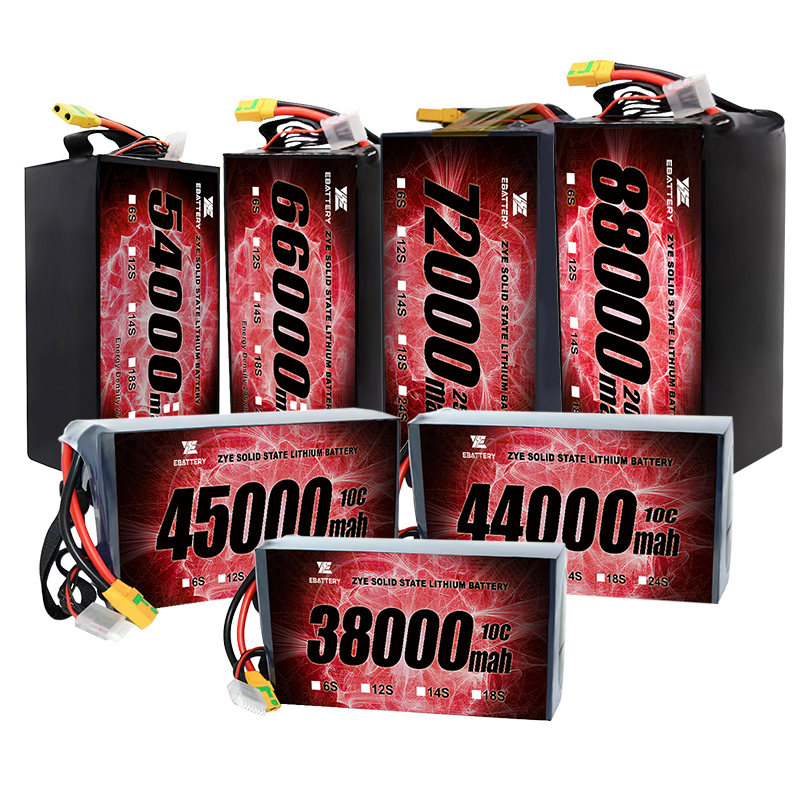
How Do Solid-State Drone Batteries Function?
At their core, solid-state drone batteries work similarly to other lithium-based batteries: lithium ions move between the anode and cathode during charging and discharging to generate power. The difference lies in the solid electrolyte, which boosts both performance and safety exponentially. And here’s where the Battery Management System (BMS) becomes critical—especially for solid-state technology. While flying, the BMS constantly monitors voltage, current, and temperature, preventing overcharging, overdischarging, and thermal runaway. It doesn’t just protect the battery; it optimizes the solid electrolyte’s potential, ensuring efficiency and safety even during high-intensity operations.

A Quick Guide to Drone Battery Types
When choosing a drone battery, understanding your options is key. Here’s how the main types stack up:
LiPo (Lithium Polymer) Batteries: Lightweight and flexible with a high discharge rate, these are common in consumer drones. But they’re prone to overheating, making them less ideal for professional use.
Li-ion (Lithium-ion) Batteries: Known for reliable cycle life and solid energy density, they’re a good choice for longer flights—but they still fall short of solid-state performance.
Solid-State Batteries: With higher energy density, enhanced safety, and longer lifespans, they’re the top pick for professional drones and UAVs in tough environments. From industrial inspections to cinematic shoots, solid-state batteries offer the perfect blend of power and dependability.
Send Inquiry



X
We use cookies to offer you a better browsing experience, analyze site traffic and personalize content. By using this site, you agree to our use of cookies.
Privacy Policy
News
 How to build a drone lipo battery pack?2025/08/28