English
 Español
  Português
  русский
  Français
  日本語
日本語  Deutsch
  tiếng Việt
  Italiano
  Nederlands
  ภาษาไทย
  Polski
  한국어
한국어  Svenska
  magyar
  Malay
Malay  বাংলা ভাষার
  Dansk
Dansk  Suomi
Suomi  हिन्दी
  Pilipino
  Türkçe
  Gaeilge
  العربية
  Indonesia
  Norsk
Norsk  تمل
تمل  český
český  ελληνικά
  український
  Javanese
  فارسی
فارسی  தமிழ்
தமிழ்  తెలుగు
  नेपाली
  Burmese
  български
  ລາວ
ລາວ  Latine
  Қазақша
  Euskal
  Azərbaycan
  Slovenský jazyk
  Македонски
  Lietuvos
  Eesti Keel
  Română
  Slovenski
  मराठी
मराठी  Srpski језик

Call Us
+86-15768259626
Email Us
coco@zyepower.com

How to Customize Drone Battery for Max Performance?
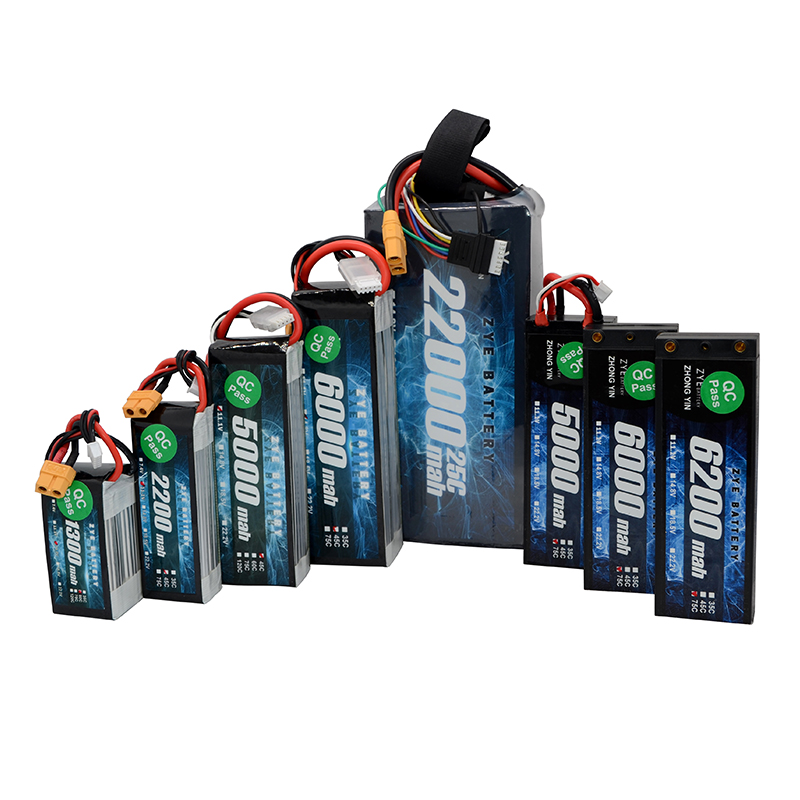
Customizing a drone battery for max performance is about matching voltage, capacity, discharge rate, and physical design to your exact UAV mission. The best custom pack is not the biggest or most expensive one; it is the one that fits your drone and mission perfectly.
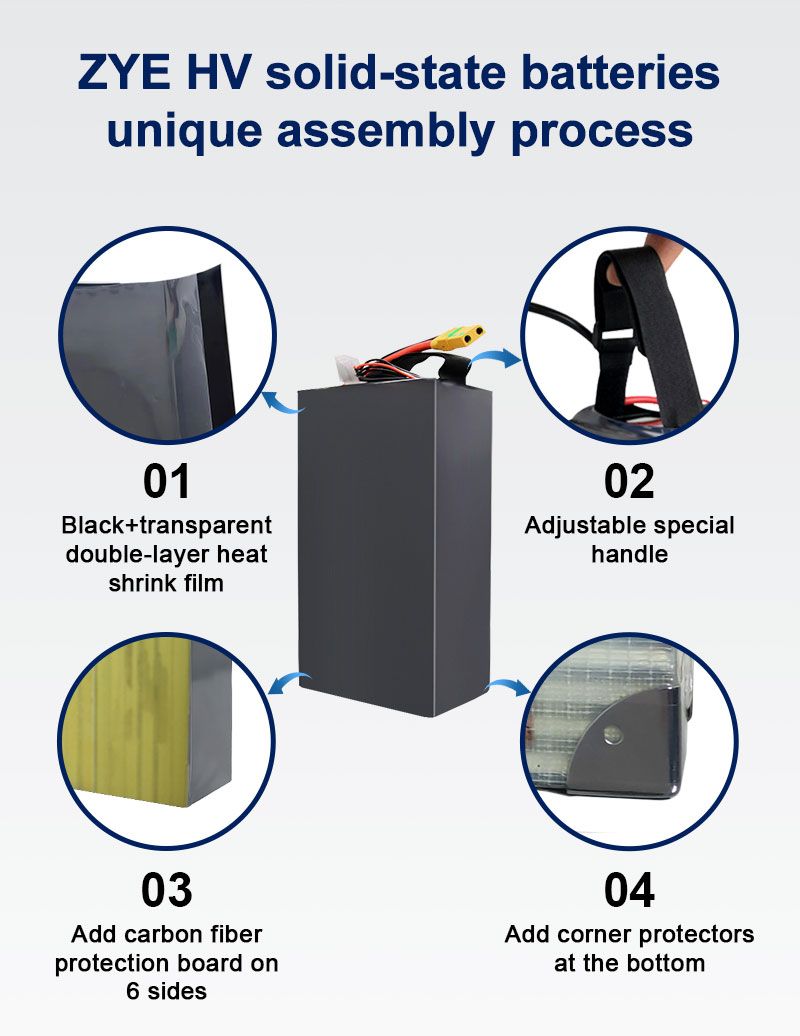
Start with voltage and cell count
Voltage is the foundation of performance. It determines how fast your motors can spin and how much power your drone can deliver. When you customize a drone battery, start by choosing the right cell count:
3S (11.1V) is common for light, entry-level drones.
6S (22.2V) is better for professional FPV, racing, and high-performance UAVs.
If the voltage does not match your motors and ESC, the drone will either feel weak or become too aggressive to control. Always confirm voltage first, then move to other specs.
Choose capacity for flight time and weight
Capacity, measured in mAh, controls how much energy your battery stores. A larger capacity usually gives longer flight time, but it also adds weight.
Too much weight can actually reduce flight time because the drone works harder to stay airborne. That is why you need to balance capacity with your UAV's maximum payload and weight limits.
For FPV and racing, many pilots prefer 1100–1500mAh on 5-inch quads. For industrial UAVs, higher capacity may be needed for longer missions.
Match discharge rate to your mission
The discharge rate (C rating) shows how much current the battery can deliver safely. High-performance drones need high C ratings to handle fast acceleration and heavy loads.
Standard camera drones may be fine with 20C–30C.
FPV and racing drones often need 50C or higher for punch and quick turns.
A high C rating means lower internal resistance and smoother power delivery. But remember: the C rating must match your motors and ESC. A too-low C rating can cause voltage sag and weak performance.
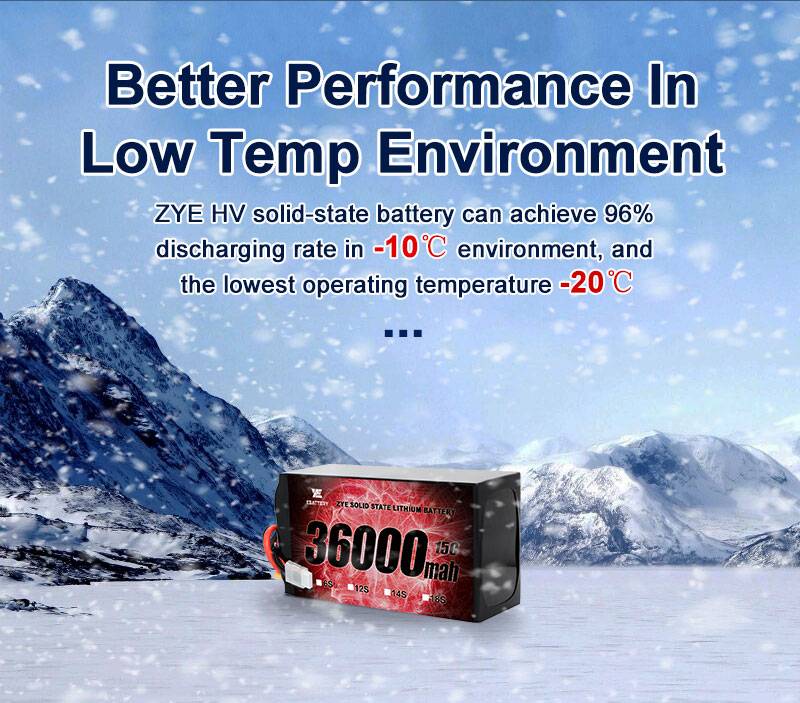
Optimize size, weight, and connector
When you customize a drone battery, the pack must fit the airframe. Even a small size mismatch can cause installation problems or affect the center of gravity.
Weight is also critical. A heavier battery can reduce flight time and put more stress on motors and frames.
Connector type matters too. Common choices include XT60 for general use and specialized connectors for high-current builds. Some batteries also include temperature sensors and smart BMS for better protection.
Add safety and smart features
For max performance and reliability, consider adding safety features:
Overcharge and over-discharge protection.
Short-circuit protection.
Temperature monitoring and smart BMS.
These features may seem small, but they protect your investment and keep the battery performing well over time.
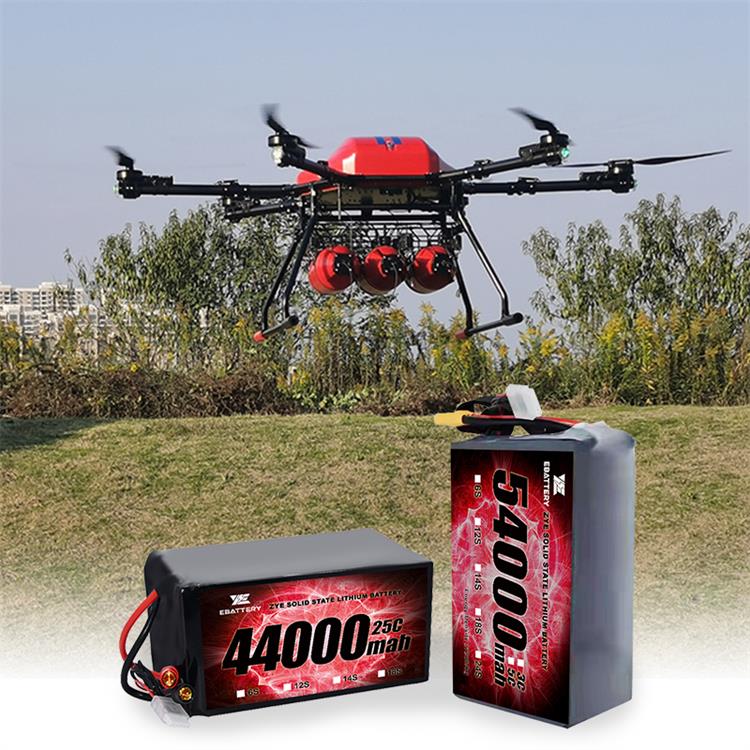
Work with a manufacturer that understands UAVs
The best way to customize a drone battery for max performance is to work with a factory that knows UAV power systems. They can help you balance capacity, voltage, discharge rate, weight, and safety instead of just selling standard packs.
For OEM buyers, this is especially important because the battery must integrate cleanly with the rest of the drone.
Why ZYEBATTERY is a good partner
For ZYEBATTERY, the message is simple: we help customers customize drone battery solutions for max performance, from high-performance LiPo to solid-state lithium-ion packs. We support custom voltage, capacity, discharge rate, size, and connector options for FPV, racing, industrial, and commercial UAV applications.
Send Inquiry



X
We use cookies to offer you a better browsing experience, analyze site traffic and personalize content. By using this site, you agree to our use of cookies.
Privacy Policy
News
 How to build a drone lipo battery pack?2025/08/28