English
 Español
 Português
 русский
 Français
 日本語
 Deutsch
 tiếng Việt
 Italiano
 Nederlands
 ภาษาไทย
 Polski
 한국어
 Svenska
 magyar
 Malay
 বাংলা ভাষার
 Dansk
 Suomi
 हिन्दी
 Pilipino
 Türkçe
 Gaeilge
 العربية
 Indonesia
 Norsk
 تمل
 český
 ελληνικά
 український
 Javanese
 فارسی
 தமிழ்
 తెలుగు
 नेपाली
 Burmese
 български
 ລາວ
 Latine
 Қазақша
 Euskal
 Azərbaycan
 Slovenský jazyk
 Македонски
 Lietuvos
 Eesti Keel
 Română
 Slovenski
 मराठी
 Srpski језик

Call Us
+86-15768259626
Email Us
coco@zyepower.com

Can I charge lipo battery with li-ion charger?
Can I Charge a LiPo Battery With a Li-Ion Charger? Single Cell vs. Multi-Cell
The answer changes depending on how many cells are in your pack. For a single-cell pack, it can work with care. For the multi-cell packs most drones use, a typical Li-ion charger is usually the wrong tool.
Here's why, and what to do instead.
Why It Can Work for Single-Cell Packs
A standard LiPo cell and a standard Li-ion cell both charge to 4.2V. Both use constant current followed by constant voltage. A charger designed for one can, in principle, charge the other, as long as the voltage limit matches.
That's why a 1S LiPo, like the small cells in micro drones, can often be charged from a single-cell Li-ion charger. If the charger's output is 4.2V and the current is set at or below the pack's recommended rate, the basics line up.
Still, check two things first. Confirm your pack is a standard 4.2V chemistry and not a high-voltage LiHV type that charges to 4.35V. And confirm the charge current doesn't exceed the pack's rating. Many small packs should charge at around 1C or less.
Why Multi-Cell Packs Are the Real Problem
Most drone batteries are 3S, 4S, 6S, or more. These have several cells in series, and cells in a series string never stay perfectly identical. Over time, one cell charges a little faster than another.
A proper LiPo balance charger watches each cell individually through the balance lead, the small multi-pin connector on the pack. When one cell reaches 4.2V, the charger bleeds off or redirects current so the others can catch up.
Many Li-ion chargers don't do this. Some charge a single cell at a time. Others charge a fixed pack voltage and simply watch the total. With a multi-cell LiPo, that creates a real hazard. The charger sees the total pack voltage and keeps going while one cell is already above its safe limit. Even a small overcharge on one cell can cause swelling, heat, and fire.
So for a 3S pack or larger, the question isn't just voltage. It's whether the charger can balance each cell.

What to Check Before Charging
Cell count. The charger must be set to the exact series count of the pack.
Balance capability. For packs with a balance lead, use a charger that uses it.
Voltage per cell. Confirm 4.2V for standard LiPo, 4.35V for LiHV.
Charge current. Match the manufacturer's recommendation.
Termination method. The charger should stop automatically when each cell is full, not just when the total reaches a number.
If you can't confirm all of these, don't charge it.
What Not to Do
Don't charge a multi-cell LiPo through the main discharge lead alone.
Don't use a phone, laptop, or power-bank charger directly on a bare LiPo cell.
Don't charge swollen, damaged, or deeply discharged packs.
Don't leave any charging pack unattended, and charge on a non-flammable surface.
Better Options
A dedicated LiPo balance charger is inexpensive compared with the cost of a damaged aircraft or a battery fire. Look for one that supports your pack's cell count, shows individual cell voltages, and has storage and balance modes. For solid state packs, use the charger and profile the manufacturer specifies, since voltage windows can differ.
Where ZYEBATTERY Fits
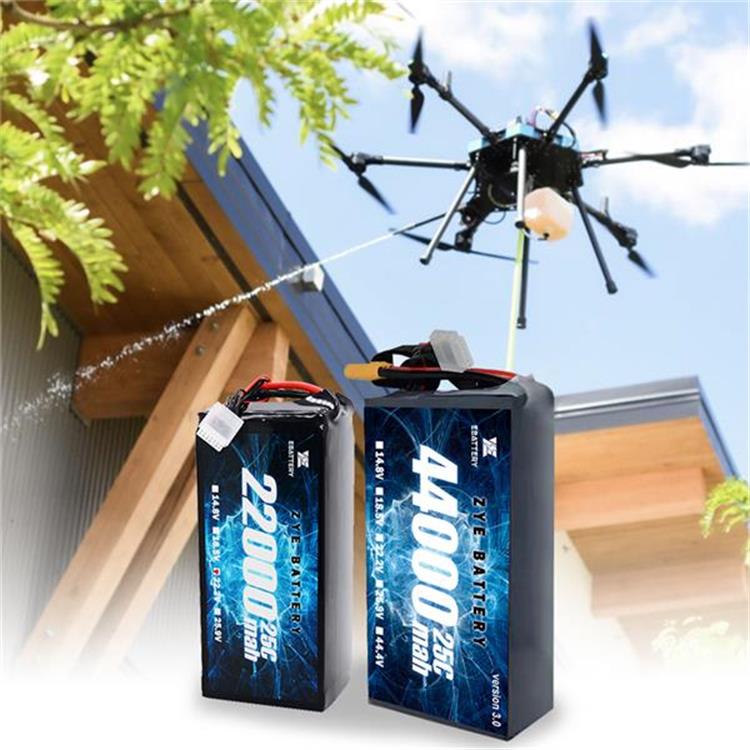
ZYEBATTERY supplies lithium polymer and solid state lithium ion UAV batteries with clear charging specifications, including cell count, voltage limits, recommended current, and connector details. If you're unsure whether your charger matches your pack, that information is the starting point. A few minutes of checking is cheaper than any shortcut.
Previous:How do you condition a lipo battery?
Send Inquiry



X
We use cookies to offer you a better browsing experience, analyze site traffic and personalize content. By using this site, you agree to our use of cookies.
Privacy Policy
News
 Can I charge lipo battery with li-ion charger?2026/11/19
Can I charge lipo battery with li-ion charger?