English
 Español
  Português
  русский
  Français
  日本語
日本語  Deutsch
  tiếng Việt
  Italiano
  Nederlands
  ภาษาไทย
  Polski
  한국어
한국어  Svenska
  magyar
  Malay
Malay  বাংলা ভাষার
  Dansk
Dansk  Suomi
Suomi  हिन्दी
  Pilipino
  Türkçe
  Gaeilge
  العربية
  Indonesia
  Norsk
Norsk  تمل
تمل  český
český  ελληνικά
  український
  Javanese
  فارسی
فارسی  தமிழ்
தமிழ்  తెలుగు
  नेपाली
  Burmese
  български
  ລາວ
ລາວ  Latine
  Қазақша
  Euskal
  Azərbaycan
  Slovenský jazyk
  Македонски
  Lietuvos
  Eesti Keel
  Română
  Slovenski
  मराठी
मराठी  Srpski језик

Call Us
+86-15768259626
Email Us
coco@zyepower.com

Are solid state batteries better than lithium?
Are Solid State Batteries Better Than Lithium?
What UAV Operators Actually Need to Know
This question comes up constantly, and it's based on a framing that needs a quick fix before the comparison makes sense.
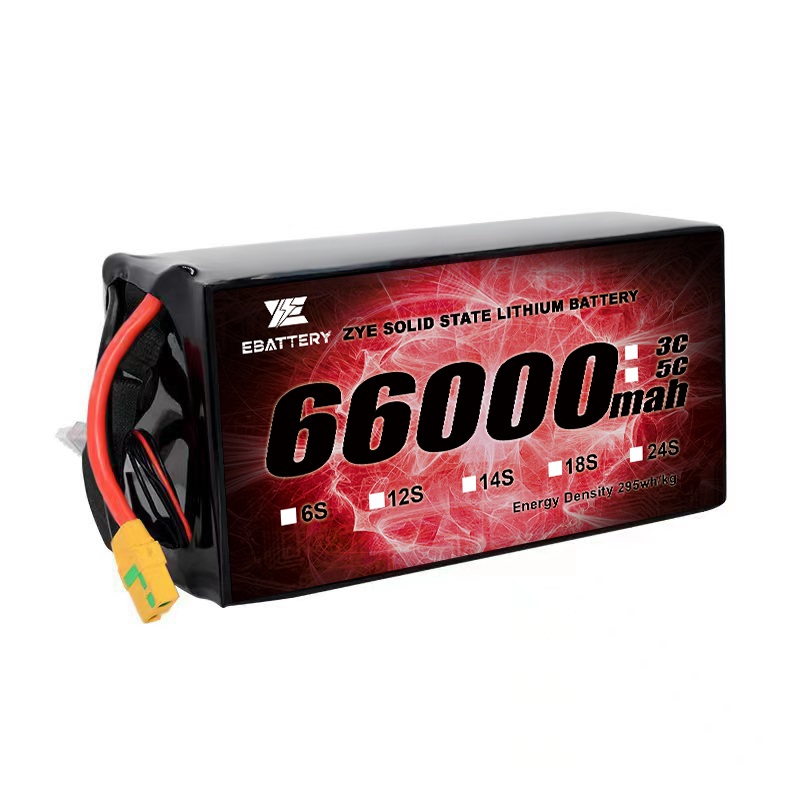
Solid state batteries are lithium batteries. They use the same fundamental chemistry — lithium ions moving between electrodes to store and release energy. What makes them "solid state" isn't a different chemistry family. It's a different electrolyte: solid material instead of liquid or gel. So the real question is whether solid state lithium batteries perform better than conventional liquid-electrolyte lithium batteries — specifically lithium polymer (LiPo) and standard lithium-ion packs that most UAV operators are currently running.
That comparison is worth making. Here's how it actually breaks down.
What the Electrolyte Change Actually Does
The electrolyte is the medium lithium ions travel through during charge and discharge. In conventional LiPo batteries, that medium is a liquid or gel — effective, but with 3 persistent limitations: it's flammable, it degrades over time, and it loses conductivity in cold temperatures.
Replacing liquid with solid material addresses all 3 in meaningful ways. Solid electrolytes don't burn, degrade more slowly, and maintain more consistent ion conductivity across a wider temperature range. Those aren't incremental improvements — they're structural changes that affect how the battery behaves across its entire service life.
Where Solid State Outperforms Conventional Lithium Batteries
Safety. This is the clearest win. Conventional LiPo batteries can enter thermal runaway under abuse conditions — physical damage, overcharge, sustained heat — and the flammable liquid electrolyte means fire is a real outcome. Solid state cells don't have that failure pathway. A damaged solid state pack loses function rather than becoming a fire hazard. For commercial UAV operators, that difference matters in insurance, regulatory compliance, and field incident management.
Energy density. Solid state chemistry is compatible with lithium metal anodes, which store considerably more energy per gram than the graphite anodes used in most conventional lithium batteries. Current production solid state UAV batteries are reaching 330 to 400 Wh/kg at the pack level versus 200 to 260 Wh/kg for quality LiPo alternatives. More energy per kilogram means longer flight times without adding battery weight.
Cycle life. Solid electrolytes are more chemically stable than liquid ones over repeated charge-discharge cycles. The electrode-electrolyte interface degrades more slowly, which translates into better capacity retention across more cycles. Commercial UAV applications are seeing 600 to 900 cycles at 80% capacity retention for solid state packs versus 300 to 500 for equivalent LiPo under similar operating conditions.
Cold weather performance. Liquid electrolytes lose conductivity significantly below 40°F, which reduces LiPo pack capacity and reliability in cold conditions. Solid electrolytes are less temperature-sensitive, maintaining more consistent performance in moderate cold — relevant for UAV pilots flying inspections or mapping missions through winter months.
Where Conventional Lithium Batteries Still Have the Edge
Cost is the straightforward one. Quality LiPo batteries cost significantly less per unit than comparable solid state options in 2026. For budget-constrained operations or applications where the performance advantages of solid state don't justify the premium, LiPo remains a practical choice.
High-rate discharge is the technical caveat. Some solid state cell designs show higher internal resistance than optimized LiPo packs under peak current demand — which can limit performance in applications requiring aggressive short-burst power delivery. This gap is narrowing as solid state engineering matures, but it's real for certain use cases today.
Availability is also simpler with conventional lithium. LiPo packs are available from more suppliers in more configurations, with more established support infrastructure globally.

The Practical Answer for UAV Operators
Solid state batteries outperform conventional liquid-electrolyte lithium batteries on the metrics that matter most for serious commercial UAV operations: safety, endurance, and long-term economics. Conventional LiPo holds advantages in upfront cost and peak discharge performance for specific applications.
ZYEBATTERY manufactures both solid state lithium ion and high-performance lithium polymer UAV batteries because the right answer depends on the operation. Understanding the actual comparison — not solid state versus "lithium," but solid state versus liquid-electrolyte lithium — is where a useful battery decision starts.
Send Inquiry



X
We use cookies to offer you a better browsing experience, analyze site traffic and personalize content. By using this site, you agree to our use of cookies.
Privacy Policy
News
 How to build a drone lipo battery pack?2025/08/28