English
 Español
  Português
  русский
  Français
  日本語
日本語  Deutsch
  tiếng Việt
  Italiano
  Nederlands
  ภาษาไทย
  Polski
  한국어
한국어  Svenska
  magyar
  Malay
Malay  বাংলা ভাষার
  Dansk
Dansk  Suomi
Suomi  हिन्दी
  Pilipino
  Türkçe
  Gaeilge
  العربية
  Indonesia
  Norsk
Norsk  تمل
تمل  český
český  ελληνικά
  український
  Javanese
  فارسی
فارسی  தமிழ்
தமிழ்  తెలుగు
  नेपाली
  Burmese
  български
  ລາວ
ລາວ  Latine
  Қазақша
  Euskal
  Azərbaycan
  Slovenský jazyk
  Македонски
  Lietuvos
  Eesti Keel
  Română
  Slovenski
  मराठी
मराठी  Srpski језик

Call Us
+86-15768259626
Email Us
coco@zyepower.com

High Voltage UAV Battery Guide: Match to Your Drone’s Power Needs
Thinking about switching to a high voltage UAV battery? It’s not just the latest trend—it’s a solid engineering move for squeezing more performance out of your platform. But here’s the catch: slapping any high-voltage pack into your drone isn’t a magic fix. In fact, getting it wrong can lead to fried electronics or a drone that feels sluggish and out of tune.
Matching the right high voltage drone battery to your specific setup is what separates a true upgrade from an expensive mistake. Let’s walk through how to make that match intelligently.
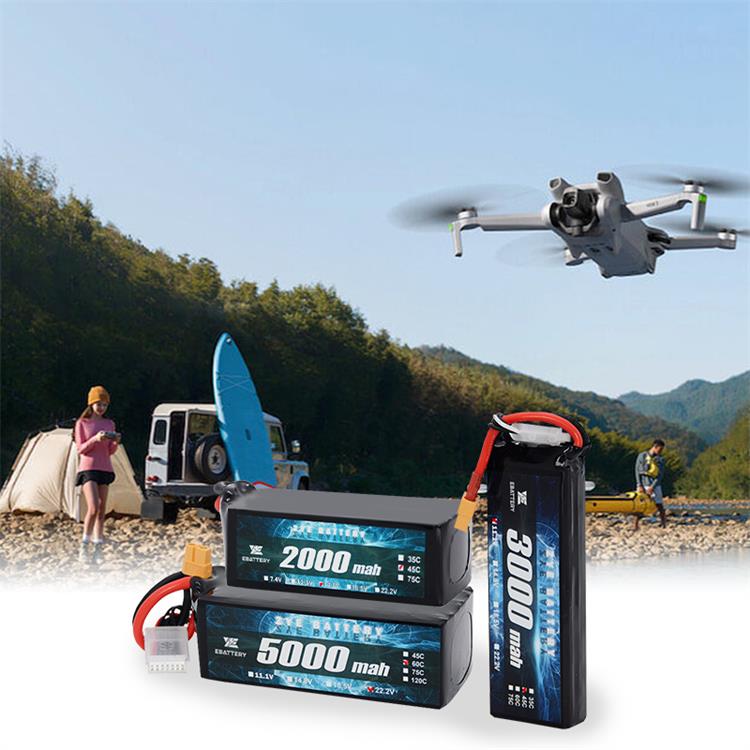
Why Voltage Matters: It’s About Efficiency, Not Just Power
First, let’s clear up a common mix-up. A high voltage battery (like a 12S or 14S LiPo) doesn’t just mean “more power” in a brute force way. It’s about delivering power more efficiently.
Think of your drone’s power system like a garden hose. Voltage is the water pressure. Amps are the volume of water. To water a distant plant (do work), you can use a low-pressure, high-volume flow, or a high-pressure, low-volume flow. The high-pressure method loses less water to friction in the hose.
In drone terms, a high voltage system delivers the same wattage (power) with lower current. This means:
Less energy lost as heat in the wires, ESCs, and connectors.
Reduced voltage sag under heavy throttle, giving you more consistent power.
Often, the ability to use lighter gauge wiring.
The result? Potentially longer flight times, cooler running components, and snappier throttle response. But only if your drone is built for it.
The Compatibility Checklist: Don’t Plug It In Blindly
You can’t just upgrade the battery alone. Your entire drone’s powertrain needs to be on board. Here’s your pre-purchase checklist:
ESC Rating is King: This is the most critical part. Your Electronic Speed Controllers must be rated for the maximum voltage of your new pack. A 6S ESC will be destroyed by a 12S battery. Always check the ESC specs first.
Motor KV Rating: Motors have a KV rating (RPM per volt). A motor wound for 6S will spin wildly fast and draw dangerous current on 12S. When moving to a higher voltage system, you typically need a lower KV motor to keep the RPM and current draw in a safe, efficient range.
Power Distribution & Connectors: Ensure your power distribution board (PDB) or flight controller’s built-in regulator can handle the input voltage. Also, verify that your connectors (like XT90s) are rated for the sustained current of your setup.
Matching Capacity & Discharge to Your Mission
Once you’ve confirmed compatibility, you need to fine-tune the pack itself.
For Long-Endurance Mapping/Surveying: You’re after maximum flight time. Look for a high voltage LiPo with a high capacity (mAh) and a moderate, stable discharge rate (C-rating). The goal is energy density for extended UAV flight duration. Weight is a key trade-off here.
For Heavy-Lift or High-Speed Applications: You need both energy and power. Prioritize a pack with a true high C-rating that can deliver massive current without sagging. This ensures your drone can handle the high power demands of lifting heavy payloads or aggressive maneuvers. Look for manufacturers who specify performance under load, not just theoretical ratings.
For Extreme Environments: If you operate in very hot or cold climates, discuss this with your battery supplier. A premium UAV battery will be built with materials and a BMS that manage thermal stability effectively, protecting both performance and safety.
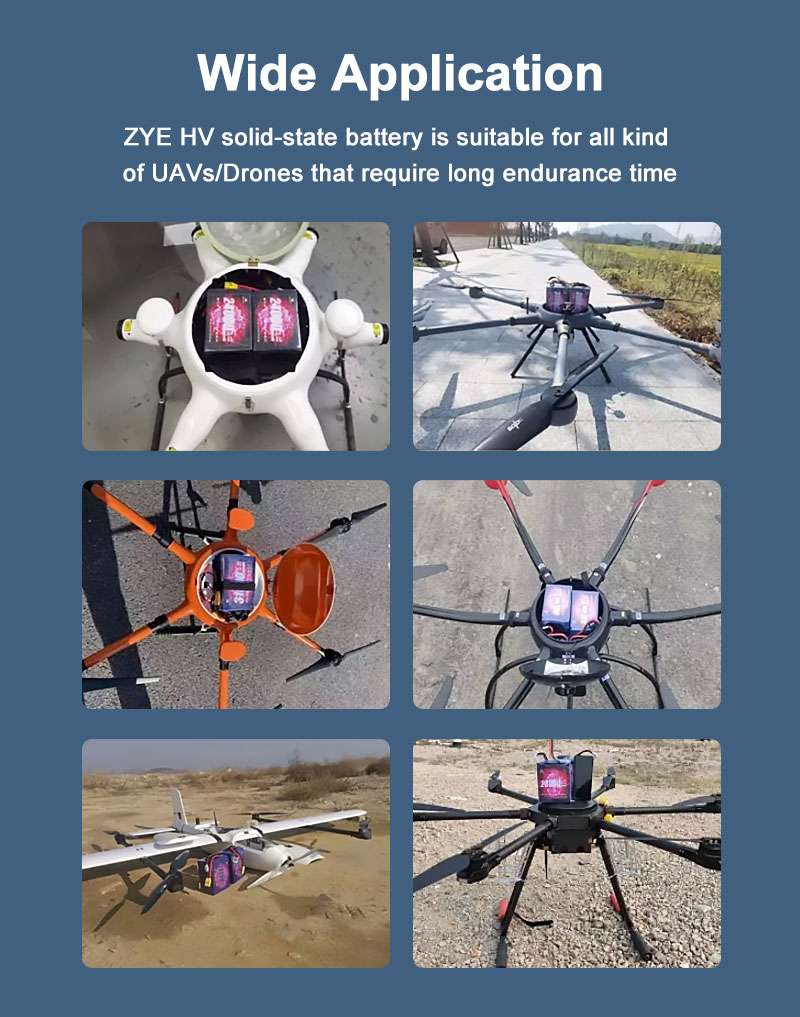
The Smart Path Forward: Consult, Don’t Assume
Switching to a high voltage system is a significant change. The safest and most effective path is often a conversation with specialists. At ZYEBATTERY, we don’t just sell batteries; we help solve power problems.
When you approach us, come prepared with:
Your drone model or frame type.
Your motor KV and ESC voltage rating.
Your primary mission type (e.g., endurance, speed, payload weight).
Any environmental challenges you face.
This allows us to recommend or design a custom high voltage battery solution that aligns perfectly with your drone’s power needs. We can balance the variables—voltage, capacity, weight, and discharge rate—into a pack that feels like a natural part of your system.
Upgrading your power system is one of the most impactful changes you can make. Doing it right unlocks new levels of efficiency and capability. Doing it wrong is risky and costly.
Ready to explore a high-voltage upgrade tailored for your specific aircraft? Contact our technical team at ZYEBATTERY. Share your setup and goals, and let’s discuss how a precisely matched high voltage UAV battery can transform your performance.
Send Inquiry



X
We use cookies to offer you a better browsing experience, analyze site traffic and personalize content. By using this site, you agree to our use of cookies.
Privacy Policy
News
 How to build a drone lipo battery pack?2025/08/28