English
 Español
  Português
  русский
  Français
  日本語
日本語  Deutsch
  tiếng Việt
  Italiano
  Nederlands
  ภาษาไทย
  Polski
  한국어
한국어  Svenska
  magyar
  Malay
Malay  বাংলা ভাষার
  Dansk
Dansk  Suomi
Suomi  हिन्दी
  Pilipino
  Türkçe
  Gaeilge
  العربية
  Indonesia
  Norsk
Norsk  تمل
تمل  český
český  ελληνικά
  український
  Javanese
  فارسی
فارسی  தமிழ்
தமிழ்  తెలుగు
  नेपाली
  Burmese
  български
  ລາວ
ລາວ  Latine
  Қазақша
  Euskal
  Azərbaycan
  Slovenský jazyk
  Македонски
  Lietuvos
  Eesti Keel
  Română
  Slovenski
  मराठी
मराठी  Srpski језик

Call Us
+86-15768259626
Email Us
coco@zyepower.com

Which Customized Drone Battery Suits Your Commercial UAV’s Power Needs?
Choosing a customized drone battery for a commercial UAV starts with your mission profile: endurance, payload, and safety requirements should drive every power decision. The “best” custom battery is the one that delivers enough energy, within your weight and safety limits, for consistent flights over the life of the drone.
Start with Your UAV Mission
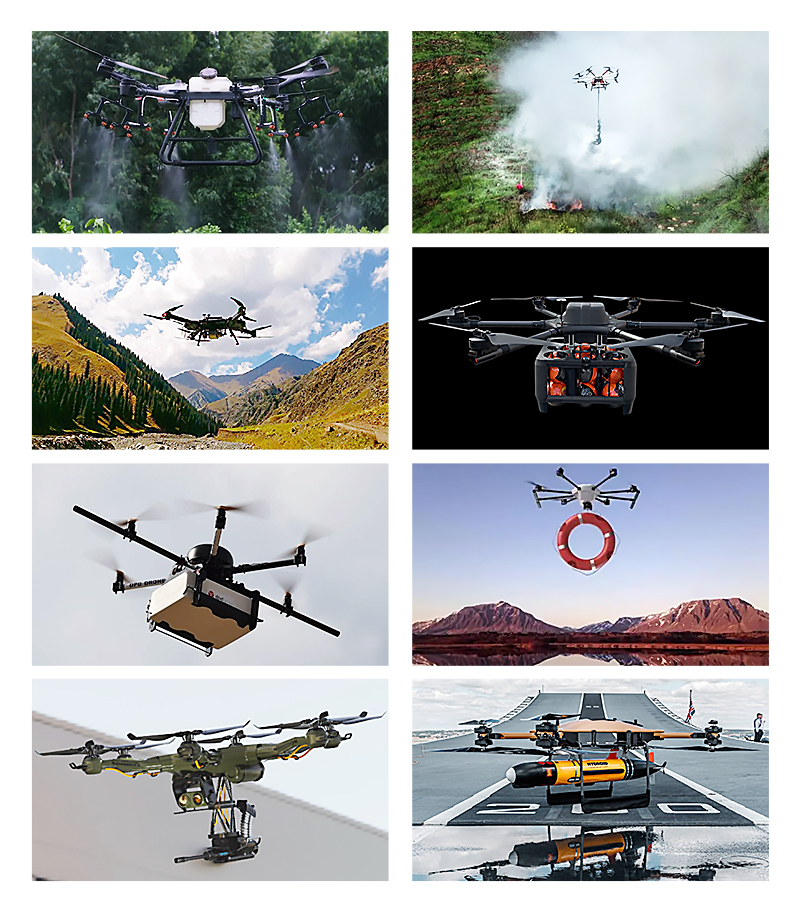
For commercial UAVs, the ideal customized battery looks different for mapping, inspection, delivery, security, and agriculture.
Mapping and inspection missions prioritize longer flight time and stable voltage, often favoring higher‑energy chemistries like lithium‑ion or semi‑solid lithium packs.
Delivery, public safety, and agriculture demand more burst power for takeoff and maneuvering, so high‑discharge LiPo or LiHV solutions remain common.
Key Technical Parameters to Define
Before you talk to a battery engineer or supplier, lock in a few core numbers.
Voltage and configuration: Commercial UAV batteries are often built from 6S up to 12S or higher, with series cells setting nominal voltage and parallel groups setting total capacity and current headroom.
Energy and flight time: Use your average power draw and target flight minutes to estimate required watt‑hours, then add at least 20% reserve so you are not landing at the edge of an empty pack.
Discharge capability: Heavy‑lift and high‑speed platforms need packs that safely handle peak current at takeoff and during emergency climbs, which means selecting cells with adequate C rating and low internal resistance.
Choosing the Right Chemistry
Different chemistries suit different commercial UAV roles, and customization lets you blend performance and risk control.
LiPo and LiHV: High burst power and low impedance make them ideal for agile drones and high‑load takeoff scenarios where response matters more than pure endurance.
Li‑ion (NMC/NCA): Higher energy density and better cycle life make these packs attractive for long‑range mapping and inspection, where every extra minute of flight reduces operational costs.
LiFePO₄ and emerging semi‑solid packs: LiFePO₄ provides excellent thermal stability and long cycle life for training fleets and public safety drones, while semi‑solid chemistries push energy density higher with improved thermal behavior.
Safety Systems and Mechanical Design
A commercial UAV battery is not just cells in a shell; smart systems around the cells are just as important.
Battery management system (BMS): A robust BMS tracks voltage, temperature, and state of charge, enforces protection limits, balances cells, and communicates with the flight controller so the UAV can predict safe remaining flight time.
Structure and protection: Mechanical design must handle vibration, shocks, and weather, using reinforced housings, secure mounting, and appropriate wiring and connectors sized for continuous current.
Matching a Customized Battery to Your Fleet
When you design or select a customized drone battery, think beyond a single aircraft and focus on your entire fleet.
Standardize where possible: Using a shared voltage class and connector type across models simplifies logistics, charging, and field replacement.
Work with a specialist: Experienced commercial UAV battery providers can help translate your mission data (average power, peak current, environment, regulatory needs) into a pack design that balances energy, power, safety certifications, and long‑term cost per flight hour.
Send Inquiry



X
We use cookies to offer you a better browsing experience, analyze site traffic and personalize content. By using this site, you agree to our use of cookies.
Privacy Policy
News
 How to build a drone lipo battery pack?2025/08/28