English
 Español
  Português
  русский
  Français
  日本語
日本語  Deutsch
  tiếng Việt
  Italiano
  Nederlands
  ภาษาไทย
  Polski
  한국어
한국어  Svenska
  magyar
  Malay
Malay  বাংলা ভাষার
  Dansk
Dansk  Suomi
Suomi  हिन्दी
  Pilipino
  Türkçe
  Gaeilge
  العربية
  Indonesia
  Norsk
Norsk  تمل
تمل  český
český  ελληνικά
  український
  Javanese
  فارسی
فارسی  தமிழ்
தமிழ்  తెలుగు
  नेपाली
  Burmese
  български
  ລາວ
ລາວ  Latine
  Қазақша
  Euskal
  Azərbaycan
  Slovenský jazyk
  Македонски
  Lietuvos
  Eesti Keel
  Română
  Slovenski
  मराठी
मराठी  Srpski језик

Call Us
+86-15768259626
Email Us
coco@zyepower.com

3S vs 6S Lipo Battery: Which Fits Your Hobby & Industrial Drone Needs?
Finding the right power source for your drone isn't just a technical detail—it’s the difference between a smooth mission and a frustrated landing. If you’re stuck choosing between a 3S and a 6S LiPo battery, you’re essentially deciding on the "muscle" and "stamina" of your aircraft.
Here is a breakdown of how these batteries stack up and which one actually fits your specific drone needs.
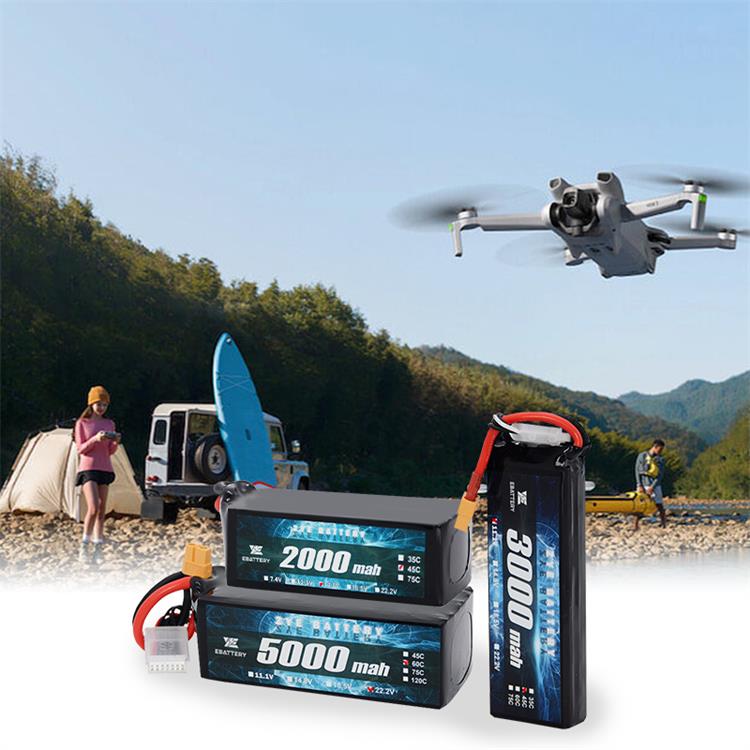
The Basics: What does the "S" stand for? In the world of LiPo (Lithium Polymer) batteries, the "S" stands for Series.
3S Battery: 3 cells connected in series (3 x 3.7V = 11.1V nominal voltage).
6S Battery: 6 cells connected in series (6 x 3.7V = 22.2V nominal voltage).
Higher voltage doesn't necessarily mean a "better" battery, but it fundamentally changes how your motors and Electronic Speed Controllers (ESCs) perform.
3S LiPo: The Hobbyist’s Sweet SpotFor many entry-level pilots and hobbyists, the 3S battery is the standard. It is lightweight, affordable, and provides plenty of punch for smaller frames.
Best For: 3-inch to 4-inch mini quads, light photography drones, and trainer planes.Advantages: * Cost-Effective: Significantly cheaper to buy and replace.
Weight: Keeps the drone agile and nimble for acrobatic maneuvers.Safety: Lower voltage is generally more forgiving for beginners learning battery maintenance.
The Downside: You’ll notice a "voltage sag" toward the end of your flight, where the drone feels significantly less powerful as the battery drains.
6S LiPo: The Industrial PowerhouseWhen you move into professional cinematography, agricultural spraying, or long-range inspections, 6S becomes the gold standard.
Best For: 5-inch racing drones, heavy-lift cinematic rigs, and industrial inspection drones.Advantages:Efficiency: Higher voltage means the drone can pull less current (amps) to achieve the same power output. This results in less heat and longer component life.
Consistency: Unlike 3S, a 6S setup maintains a much flatter power curve. You get nearly the same "punch" at 20% battery as you did at 100%.Payload Capacity: Essential for carrying heavy sensors, thermal cameras, or delivery packages.
The Downside: These batteries are heavier, bulkier, and require more expensive chargers and compatible electronics.
Which One Should You Choose?
1. The Hobbyist / Weekend Flyer
If you are building a small DIY drone or just want to fly around the local park, 3S is your best bet. It keeps your initial investment low and the drone light enough to survive the occasional "unplanned landing."
2. The Commercial / Industrial Operator
If your drone is a tool for work, go with 6S. Industrial applications demand reliability. The increased efficiency of a 6S system means your motors run cooler, your flight times are more predictable, and you have the torque needed to fight high winds during a critical inspection.
3. The Professional Cinematographer
For those carrying high-end cameras (like a RED or an Arri), 6S (or even 12S) is mandatory. The stability and power redundancy provided by higher voltage setups are non-negotiable when thousands of dollars of camera gear are in the air.
Final Pro-Tip
Remember that your motors must match your battery. A motor designed for 3S will likely burn out instantly if connected to a 6S battery. Conversely, a motor designed for 6S will barely spin on a 3S battery. Always check the KV rating of your motors before making the switch!
Would you like me to help you calculate the estimated flight time for a specific 6S industrial configuration?
Please contact us at our websites.
Send Inquiry



X
We use cookies to offer you a better browsing experience, analyze site traffic and personalize content. By using this site, you agree to our use of cookies.
Privacy Policy
News
 How to build a drone lipo battery pack?2025/08/28