English
 Español
  Português
  русский
  Français
  日本語
日本語  Deutsch
  tiếng Việt
  Italiano
  Nederlands
  ภาษาไทย
  Polski
  한국어
한국어  Svenska
  magyar
  Malay
Malay  বাংলা ভাষার
  Dansk
Dansk  Suomi
Suomi  हिन्दी
  Pilipino
  Türkçe
  Gaeilge
  العربية
  Indonesia
  Norsk
Norsk  تمل
تمل  český
český  ελληνικά
  український
  Javanese
  فارسی
فارسی  தமிழ்
தமிழ்  తెలుగు
  नेपाली
  Burmese
  български
  ລາວ
ລາວ  Latine
  Қазақша
  Euskal
  Azərbaycan
  Slovenský jazyk
  Македонски
  Lietuvos
  Eesti Keel
  Română
  Slovenski
  मराठी
मराठी  Srpski језик

Call Us
+86-15768259626
Email Us
coco@zyepower.com

Solid-state batteries: When Will "Substitutes" Become "Mainstays"?
Solid-state batteries are emerging as the next-generation power source, but hybrid solid–liquid batteries are likely to commercialize first and act as a crucial bridge between today’s liquid lithium-ion cells and future all-solid-state systems.
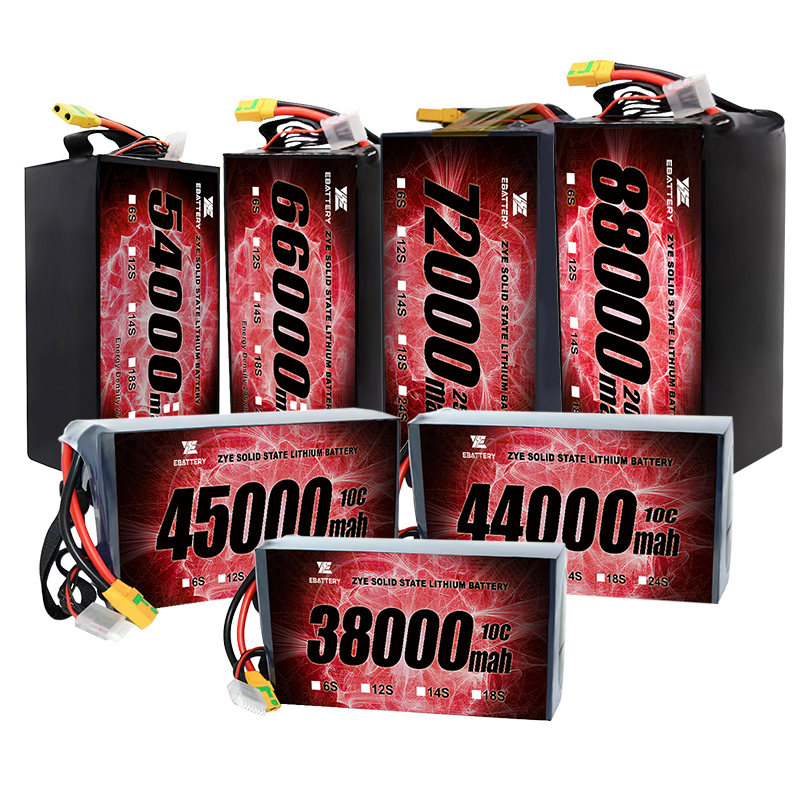
What solid-state batteries are
Solid-state batteries replace flammable liquid electrolytes with solid materials while enabling higher energy density and better safety performance. Their cathodes can use high-energy materials such as lithium-rich manganese-based compounds, while the anode can combine nano-silicon and graphite to push energy density toward 300–450 Wh/kg.
A solid electrolyte carries lithium ions without leakage risk and significantly reduces thermal runaway probability.
Higher-capacity anodes and high-voltage cathodes give solid-state batteries the potential for longer driving range in electric vehicles and improved endurance in drones or energy storage systems.
Hybrid solid–liquid as a transition
The article distinguishes liquid, hybrid solid–liquid, and all-solid-state lithium batteries, emphasizing that hybrid designs are an essential transition stage. Semi-solid, quasi-solid, and “solid” batteries on the market largely fall into this hybrid category, differing only in the ratio of liquid to solid electrolyte.
Hybrid solid–liquid batteries still contain some liquid electrolyte, which improves contact with active materials and eases manufacturing.
All-solid-state batteries contain only solid electrolyte, offering better intrinsic safety and higher theoretical energy density but facing more severe engineering challenges today.
Technical barriers to full solid-state
Although many companies and research institutes worldwide are investing in solid-state technology, no large-capacity solid-state power cell has yet matched liquid lithium-ion batteries on both performance and cost. The core difficulty lies at the solid–solid interface, where rigid electrolyte materials make it hard to maintain intimate contact with electrodes during cycling and volume changes.
Current routes include polymer, thin-film, sulfide, and oxide solid-state batteries, each with distinct advantages and limitations.
For example, polymer solid-state cells struggle at room temperature and with high-voltage cathodes, while sulfide systems are sensitive to air and require demanding manufacturing conditions.
In-situ solidification strategy
To overcome interface issues while leveraging existing lithium-ion infrastructure, researchers propose an in-situ solidification approach for hybrid solid–liquid electrolytes. During cell assembly, a liquid precursor ensures good wetting and contact; later, chemical or electrochemical reactions convert all or part of this liquid into a solid electrolyte inside the cell.
This method improves electrode–electrolyte contact, suppresses lithium dendrite growth, and balances safety, high voltage, and fast-charge performance.
It can also reuse much of the current liquid lithium-ion production process, helping manufacturers scale up more quickly and reduce costs.
Future development directions
Experts expect that all-solid-state lithium batteries will need roughly five more years before true large-scale commercialization, so hybrid solid–liquid power batteries remain a realistic near-term pathway. To accelerate industrialization, the article highlights the need for coordinated progress in materials, cell design, manufacturing, and standards.
Priorities include: developing solid electrolytes with balanced ionic conductivity, stability, and processability; matching high-energy electrodes such as high-nickel cathodes and silicon–carbon or lithium metal anodes; and integrating digital simulation with intelligent manufacturing.
Industry is encouraged to build robust supply chains for key materials, invest in automated equipment, refine testing and evaluation systems, and gradually evolve from hybrid solid–liquid lithium-ion batteries toward fully solid-state lithium metal batteries.
Send Inquiry



X
We use cookies to offer you a better browsing experience, analyze site traffic and personalize content. By using this site, you agree to our use of cookies.
Privacy Policy
News
 How to build a drone lipo battery pack?2025/08/28