English
 Español
  Português
  русский
  Français
  日本語
日本語  Deutsch
  tiếng Việt
  Italiano
  Nederlands
  ภาษาไทย
  Polski
  한국어
한국어  Svenska
  magyar
  Malay
Malay  বাংলা ভাষার
  Dansk
Dansk  Suomi
Suomi  हिन्दी
  Pilipino
  Türkçe
  Gaeilge
  العربية
  Indonesia
  Norsk
Norsk  تمل
تمل  český
český  ελληνικά
  український
  Javanese
  فارسی
فارسی  தமிழ்
தமிழ்  తెలుగు
  नेपाली
  Burmese
  български
  ລາວ
ລາວ  Latine
  Қазақша
  Euskal
  Azərbaycan
  Slovenský jazyk
  Македонски
  Lietuvos
  Eesti Keel
  Română
  Slovenski
  मराठी
मराठी  Srpski језик

Call Us
+86-15768259626
Email Us
coco@zyepower.com

What Makes Semi-Solid State Batteries the Next Breakthrough in Energy Storage?
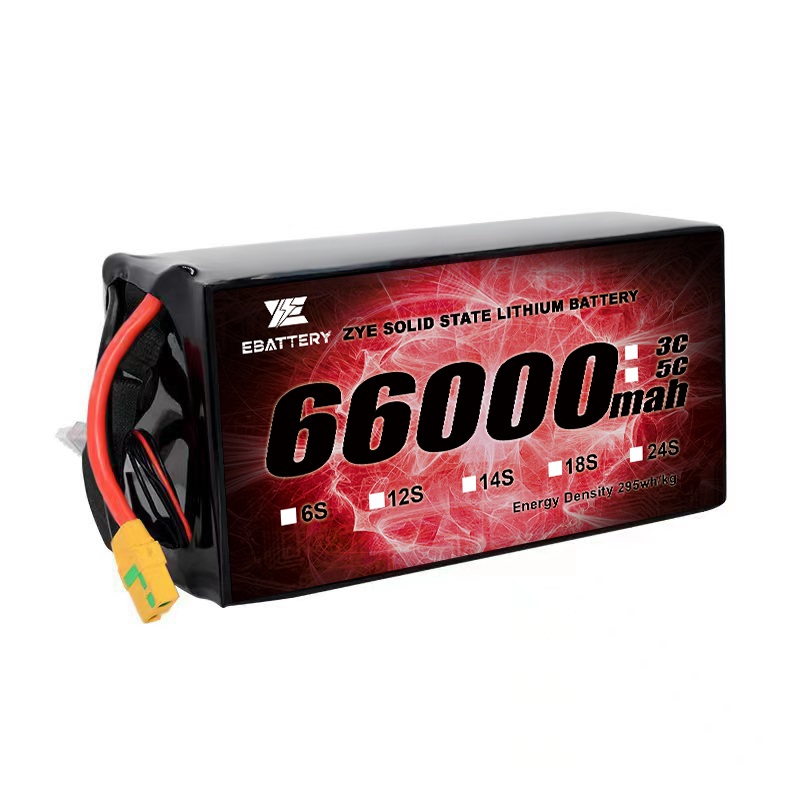
Semi-solid state batteries are becoming one of the most discussed solutions in the global energy-storage industry. Their rise comes from the urgent need for safer, longer-lasting, and higher-energy battery technology for electric vehicles, consumer electronics, ESS systems, and industrial equipment. Compared with traditional lithium-ion batteries, semi-solid state batteries deliver a transformative balance of enhanced safety, high energy density, and scalable manufacturing. Companies like Shenzhen Ebattery Technology Co., Ltd. are accelerating innovation by integrating advanced semi-solid electrolyte systems into commercialized battery packs.
This article explores how semi-solid state batteries work, why they matter, their key technical parameters, and how they compare with conventional technologies. It also includes a professional FAQ for deeper understanding.

How Do Semi-Solid State Batteries Improve Performance Compared to Traditional Lithium-Ion Batteries?
Semi-solid state batteries replace part of the liquid electrolyte with a gel-like or solidified electrolyte. This hybrid system reduces leakage, improves thermal stability, and significantly lowers fire-related risks. The semi-solid matrix also enables a higher charge-carrier concentration, which enhances both energy density and cycle life.
Key performance improvements include:
-
Higher Safety: Reduced flammability, better thermal stability, and improved tolerance to high-temperature operation.
-
Higher Energy Density: Semi-solid electrolyte allows denser electrode packing, resulting in longer runtime and extended mileage for EVs.
-
Slower Degradation: More stable interfaces between the electrolyte and electrodes minimize inner resistance growth.
-
Better Suitability for Fast Charging: Lower risk of lithium dendrite growth supports safer high-rate charging.
Why Are Semi-Solid State Batteries Seen as an Ideal Transition Between Liquid and Full Solid-State Technologies?
Fully solid-state batteries promise exceptional performance, but the global industry still faces scaling challenges. Semi-solid state batteries, however, provide an achievable and commercially practical path forward.
Reasons they act as the perfect transitional technology:
-
Industrial Compatibility: Semi-solid manufacturing lines can be adapted from existing lithium-ion processes, reducing investment cost.
-
Balanced Performance: Offers many safety and density advantages of solid-state batteries without extreme production complexity.
-
Cost Efficiency: Uses widely available electrolyte materials and reduces high-cost ceramic components.
-
Scalability: Suitable for EVs, power tools, drones, medical devices, and ESS systems—allowing faster commercial adoption.
Shenzhen Ebattery Technology Co., Ltd. has been focusing on bridging this gap, ensuring scalable production while delivering superior performance consistency.
What Are the Key Technical Parameters of Semi-Solid State Batteries?
To provide a clear overview, here are typical parameters used in semi-solid state battery systems developed for industrial and commercial applications.
Technical Specifications Table
| Parameter | Typical Value / Range | Description |
|---|---|---|
| Energy Density | 280–350 Wh/kg | Supports longer EV mileage and extended runtime. |
| Cycle Life | 1,500–3,000 cycles | Depends on material system and operating conditions. |
| Nominal Voltage | 3.2V–3.7V per cell | Varies by chemical formulation. |
| Operating Temperature | –20°C to 60°C | High thermal stability with reduced runaway risks. |
| Electrolyte Type | Semi-solid gel / polymer-enhanced | Provides improved safety and ion conductivity. |
| Charging Rate | Up to 3C | Supports fast charging with minimized dendrite formation. |
| Safety Features | Non-flammable matrix, thermal-stable interfaces | Lower leakage probability and improved protection. |
Which Advantages Make Semi-Solid State Batteries Important for Future Applications?
1. Enhanced Safety for EVs and Energy Storage Systems
Their reduced risk of combustion and improved temperature resistance make them ideal for electric vehicles and home/industrial ESS solutions.
2. Higher Energy Density for Compact Device Design
Manufacturers can design thinner, lighter, and more efficient devices without compromising runtime.
3. Excellent Lifecycle Stability
Slower cell aging supports business models requiring durability, such as fleet EVs, delivery drones, or industrial robots.
4. Manufacturing Feasibility
Adapting current manufacturing lines prevents major cost disruption, allowing faster industry adoption.
5. Environmental Advantages
Reduced use of flammable organic solvents results in cleaner and safer production.
How Do Semi-Solid State Batteries Compare With Standard Lithium-Ion Batteries? (Semi-Solid vs. Traditional Lithium-Ion)
| Feature | Semi-Solid State Batteries | Traditional Lithium-Ion |
|---|---|---|
| Electrolyte | Hybrid semi-solid/gel | Liquid electrolyte |
| Safety Level | Very High | Moderate |
| Energy Density | Higher | High |
| Thermal Stability | Excellent | Limited |
| Fast Charging | Safer and more stable | Higher dendrite risk |
| Production Cost | Moderate | Mature and low |
| Commercial Availability | Growing rapidly | Fully established |
Semi-solid state batteries clearly outperform in safety and density while maintaining practical production feasibility.
How Can Industries Benefit from Integrating Semi-Solid State Batteries?
✔ Electric Vehicles
Higher mileage, extended cycle life, and enhanced thermal reliability.
✔ Consumer Electronics
Slimmer designs, longer battery life, and reduced overheating issues.
✔ Industrial Equipment
Reliable long-cycle power for robotics, automation tools, AGVs, and sensors.
✔ Energy Storage Systems
Significantly safer for residential and industrial ESS deployments due to lower fire risks.
✔ Aerospace & Drones
Reduced weight and higher capacity drastically improve performance and mission duration.
Shenzhen Ebattery Technology Co., Ltd. offers customizable battery modules designed for each of the above applications.
What Makes Shenzhen Ebattery Technology Co., Ltd. a Reliable Manufacturer of Semi-Solid State Batteries?
-
Years of technological experience in advanced battery solutions.
-
Ability to support global OEM/ODM requirements.
-
Strict quality control for safety, consistency, and cycle stability.
-
Professional engineering support from material design to pack integration.
-
Scalable production for automotive, industrial, and consumer-grade solutions.
Their semi-solid state batteries are widely used in electric mobility, smart hardware, and energy-storage applications.
FAQ About Semi-Solid State Batteries
1. What are semi-solid state batteries and how do they differ from standard lithium-ion batteries?
Semi-solid state batteries use a hybrid electrolyte combining solid and gel-like components. This structure reduces flammability, enhances thermal stability, and increases energy density compared with traditional liquid-based lithium-ion batteries.
2. Why are semi-solid state batteries considered safer?
The semi-solid electrolyte contains fewer volatile organic solvents, significantly reducing the risk of leakage, combustion, and thermal runaway. This makes them ideal for EVs and energy-storage systems where safety is critical.
3. Can semi-solid state batteries support fast charging?
Yes. Their stable electrolyte interface helps inhibit lithium dendrite growth, allowing safer high-rate charging with lower degradation.
4. What applications are best suited for semi-solid state batteries?
They are widely used in electric vehicles, drones, consumer electronics, medical devices, industrial robots, and stationary ESS systems due to their high energy density and superior safety.
Contact Shenzhen Ebattery Technology Co., Ltd.
For product specifications, OEM/ODM services, or technical consultation regarding semi-solid state batteries, you may contact:
Shenzhen Ebattery Technology Co., Ltd.
Email, phone, or project inquiry channels can be provided upon request.
Send Inquiry



X
We use cookies to offer you a better browsing experience, analyze site traffic and personalize content. By using this site, you agree to our use of cookies.
Privacy Policy
News
 How to build a drone lipo battery pack?2025/08/28